

Drinking wine in a time of war
The peace of winemaking is a sorely needed alternative to violent regimes warring in the name of God.

This is not one of those pandemic-inspired rants where someone hits the bottle while in a state of existential despair, hoping against hope to drown out their sorrows. True, as we approach the United States Semiquincentennial, the partisan programming surrounding freedom250.org should give any sane person pause.
But my writing about the Pacific Northwest craft culture suggests that perhaps wine grown using organic and sustainable means can help connect us at a deeper level. That is, if we are willing to truly listen to the land.
For example, when I first interviewed Nick Kristof for Cidercraft in 2024, he compared his Pulitzer Prize-winning work reporting from conflict-riddled regions with producing cider and wine at his family farm in Yamhill, Oregon. “When I write about the Middle East, I feel like I’m shouting into the wind and nobody really is listening,” he says.“But if I have a grapevine that is thirsty in August and is wilting, then I can pour a bucket of water on it, and it will respond and listen to me. That’s kind of satisfying, frankly.”
In an earlier OnlySky column, I noted how as the United States and Iran spiral into the abyss of war, the gap of mutual hatred, suspicion, and incomprehension that separates our cultures looms larger than ever. If we're going to bridge this divide and imagine a future of peace, we need to find something that unites us.
Where better to start the conversation than over a bottle of wine?
When I got an invitation to attend a wine dinner as part of the Organic Winegrowers Network, my instinct told me I should use this opportunity to explore the Willamette Valley beyond the influencer-driven PR flooding my inbox that promotes status over sustainability. Before this dinner, I decided to reconnect in person with Moe Momtazi, founder of Momtazi Vineyards and Maysara Winery in McMinnville, Oregon. As this modern-day conservationist and ancient Zoroastrian philosopher noted in the 2024 James Beard award-winning documentary SOMM: Cup of Salvation, "Wine is the sun’s radiance in liquid form."
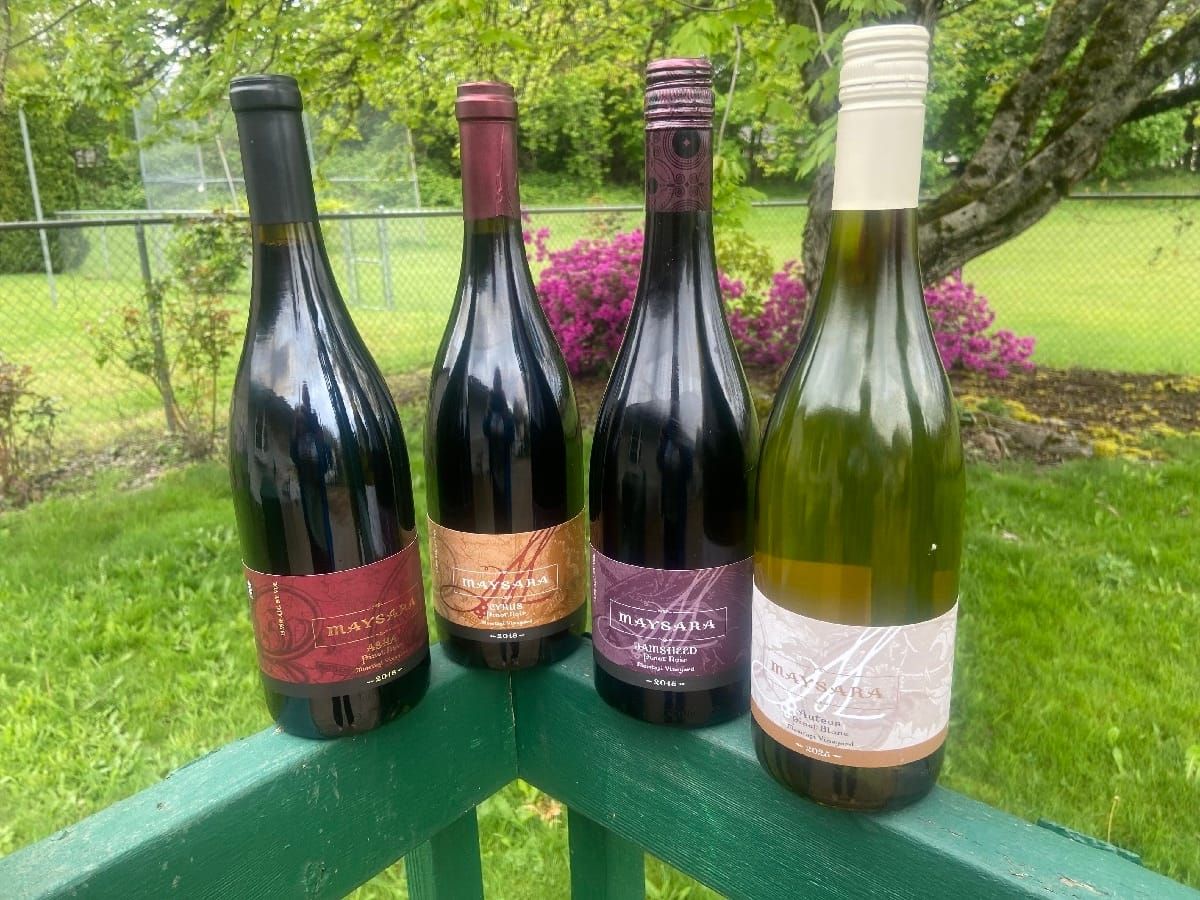
My visit to Maysara Winery's tasting room, decorated with tapestries and other artifacts, allowed me to soak in the Momtazi family's Persian culture, thus providing me with a welcome respite from the war currently raging in Iran. (“Maysara” is an ancient Persian word that means“house of wine.”) This winery embodies the spirit of Persian hospitality that Moe learned from his father and grandfather, who were a winemaker and a holistic farmer respectively. For centuries, Persians like the Momtazi family have viewed wine not as a commercial commodity, but as a living spirit that springs from the marriage of the sun and the earth and connects people in community.
READ: Persian hospitality: Connecting cultures through wine
Their wines are named after seminal Persian icons: such as my favorite wine, their Cyrus Pinot Noir named after Cyrus the Great, who is considered by many to be the father of winemaking. Each glass of Pinot Noir and other wines poured at their tasting room connects guests to the unique sensation of experiencing wine produced from grapes grown in a manner that fuses biodynamic principles with the spirit and purity of the wine in Persian culture. In each glass, I can taste the soil from where the grapes were grown, infused with the rich warmth radiating from the Persian culture.
This Persian spirit embedded within Momtazi Vineyards radiates throughout the Willamette Valley and beyond, as Moe sells his biodynamically farmed Pinot Noir grapes to a dozen wineries. In addition, I reported earlier for OnlySky how the Momtazi family pays their immigrant experience forward with their efforts to support Lutheran Community Services Northwest’s Safe Route Program, which offers social services to immigrants working in the area's vineyards. Without their skilled labor, we could not enjoy the bounty of this region.
I'm well aware of the ongoing conflicts that threaten to obliterate those historical places that connected communities through wine before the Iranian revolution. My heart ached when Moe told me of his 98-year old mother living in Tehran, whose water and electricity both get cut off between six and ten hours daily. Like Moe, I am extremely saddened by all the difficulties, destruction, and loss of life many people in Iran are facing now from both regimes.
Listening to the land
In my conversations with Moe, he finds it so surprising to experience two unhinged regimes attacking each other in the name of God. "I often wonder who this mysterious god is?" Moe asks. During my divinity school days, I could rattle off the myriad theological debates surrounding the role of God in geopolitical conflicts.
But these days I've become increasingly aware, thanks in large part to conversations with Moe and reading Kristof Farms' newsletter and Substack, about the need to listen to the land. When I allow myself to be still and focus all my senses, I feel how the natural cycles of planting and harvest that repeat endlessly can be a comforting contrast to the cyclical rise and fall of human empires. On his Instagram account Nick reminds us, "When the world is a complete mess and you want to scream in frustration at warmongers, there’s something wonderfully therapeutic about a farm."
To this end, I decided to really listen to the land at a deeper level by becoming a member of Maysara Winery's Tinoosh Wine Club family. This opportunity will enable me to further my explorations to see how the Persian culture can connect us through wine.
Also, I plan to attend one of Kristof Farms' tours to immerse myself in the land (including the wildlife they capture on camera that contribute to this ecosystem). In light of the ongoing conflicts in Iran, the Kristofs announced on their Substack that their grapes are issuing a new call: "Sit down and share a glass of Pinot Noir." Even though, as they observed, "it may be unlikely that President Trump, a teetotaler, and Supreme Leader Mujtaba Khamenei, ditto, will picnic together and share a Pinot, their grapes argue that this has been their great contribution to civilization: They have brought people together for thousands of years, lowering barriers and building warmth and good feelings."
So let's raise a glass together with others as we explore how to connect together in our shared humanity. Cheers! . . . Cin cin! . . .L’chaim! . . . Proost! . . . Salamati . . . Salud! . . . Santé! . . . Skål! . . . Let the global celebrations and connections continue.