

Will American religion one day mirror Norwegian godlessness?
We should be so lucky.

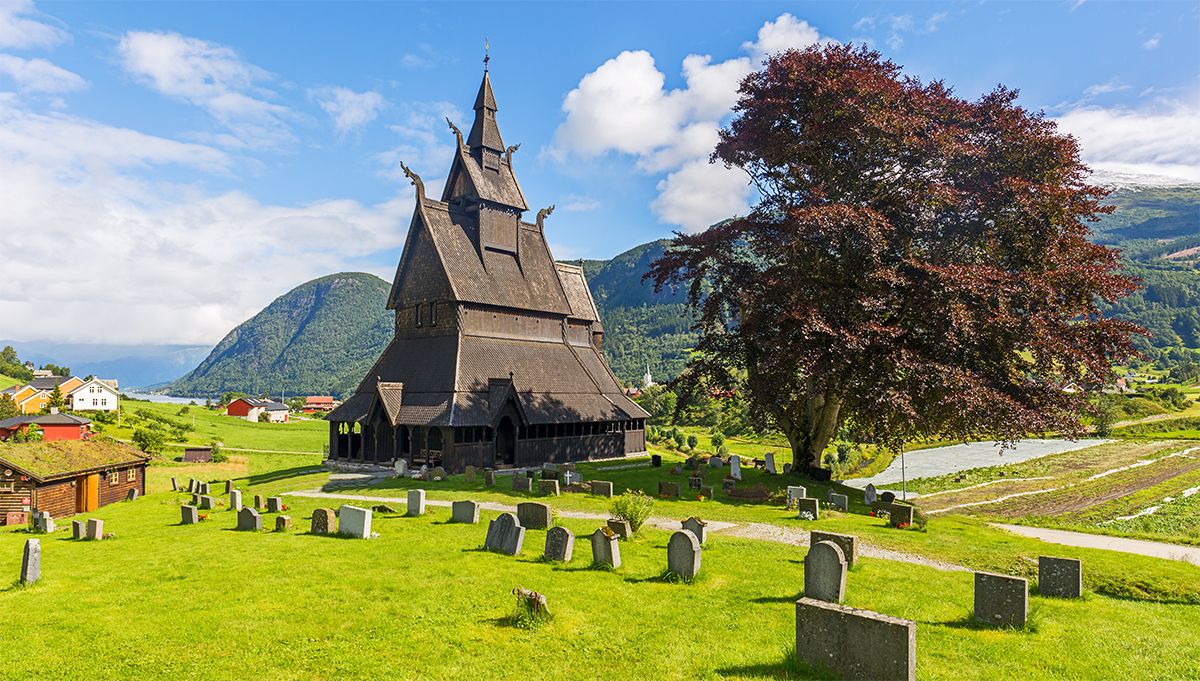
Norwegian godlessness today just might resemble American religion tomorrow.
I was thinking this as I read an essay in TheHumanist.com decrying America’s nouveau-traditional National Prayer Breakfast on Feb. 3.
The United States, with its quasi-sacred religious freedom and church-state-separation ethos, does not have an officially designated national religion, but Christianity has long been the unofficial de facto American faith. Notably, though, the religion’s long, strong majoritarian status in America has been slipping precipitously in recent decades.
And Christianity’s privileged place in American religion arguably has allowed unconstitutional and officially dubious traditional events to embed in government, such as the National Prayer Breakfast every May and the National Day of Prayer every February.
Norway, on the other hand, which embraced a national religion for centuries, finally (in 2012) jettisoned its contemporary official creed—Protestant Lutheranism—with a constitutional amendment overwhelmingly approved by Parliament, 161-3. The new law went into effect on June 15 that year.
The paradox of Norwegian godlessness
Curiously, in Norway’s case, even though only a minority of Norwegians today still believe in God and just 2% regularly attend worship services, more than 70% remain enrolled in Lutheran Church of Norway congregations. Sivert Skålvoll Urstad, a Norwegian Ph.D. sociology candidate studying religious trends, says churchgoers now use houses of worship only for previously sacred events now viewed as secular and ceremonial.
“The church is important as a bearer of traditions, even for the non-religious people,” Urstad explains. “However, their interpretation of the tradition is different. They view the church as a secular arena for confirmation and other rites of passage such as baptism, weddings and funerals. To them it is not about religion but tradition. They are fine with the priest having faith, but they are just following tradition.”
I read a story a few years ago about a Norwegian Lutheran church in which none of its congregants believed in God. Instead, they gathered for the joy of community and tradition, and preached humanist, not Christian, messages.
Ursad noted that in a 2016 survey, “more [Norwegians] didn’t believe than did,” for the first time. Additionally, 39% of respondents admitted they didn’t believe in the divine, while 37% did and 23% weren’t sure.
Today, Norway is considered one of the world’s least religious countries, even though some nonreligious Norwegians, paradoxically, still believe in peripheral supernatural beings, “like angels,” says Urstad.
A slide in American religion
Like Norway, the U.S. has grown markedly more secular in the last century after hitting a zenith of Christian piety and reach in the early to mid-20th century punctuated by the likes of uber-popular evangelical preacher Billy Graham, scriptural temptress Amy Semple McPherson and others, and the publication of Elmer Gantry, novelist Sinclair Lewis’ classic takedown of the hedonistic, hypocritical Christian revival movement.
American religion’s once-ubiquitous worshipfulness is clearly ebbing.
In 2021, pollster Gallup reported that the proportion of Americans who say they belong to a church, synagogue or mosque dropped below 50% for the first time since the late 1930s, with 47% today claiming non-affiliation with any religious congregation. That figure was preceded by a marked fall from 70% in the mid-1990s to 50% in 2019.
Religion News Service (RNS) reports that the decline in formal religious affiliation “coincides with the rise of ‘Nones,’” so-named because when asked with what religion they affiliate, reply “none.” Gallup reported that at least 21% of Americans are “nones,” comprising a demographic group as large as evangelicals or Catholics. Other polls estimate “nones” make up closer to 30% of the population.
Gallup reported that few “nones” were formally affiliated with a house of worship.
“As would be expected, Americans without a religious preference are highly unlikely to belong to a church, synagogue or mosque, although a small proportion—4% in the 2018-2020 (survey)—say they do,” Gallup report states, according to RNS. “That figure is down from 10% between 1998 and 2000.”
Vestiges of Christian privilege remain
Despite all this precipitous religious decline and clear constitutional issues, Christian privilege in America religion remains, in government (i.e., the National Prayer Breakfast, etc.) as elsewhere throughout society (the Christmas national holiday, “In God We Trust” on our money and in schools, “under God” in our national anthem). For many Americans, including non-Christians and nonbelievers, these religious venerations are culturally damaging artifacts of the past.
In her essay, TheHumanist.com editor Nicole Carr lamented:
“Yesterday was the National Prayer Breakfast, an annual event that ignores the separation of religion and government by bringing together public officials of both political parties at a gathering sponsored by one of the most secretive, conservative, well-connected religious groups in the country [The Family]. This year, disappointingly, the event was even held at the U.S. Capital Visitor Center, rather than at the usual hotel ballroom. …
“Certainly the multi-denominational occasion wasn’t designed to include nontheists. And these days the inclusion of our viewpoint seems more important than ever—especially if the ultimate goal is to truly bring people together. …
“Media reports are filled with restrictive bills being proposed on state and local levels, school districts banning books and entire areas of study. Often, these bills are based in religious fundamentalist ideas … Unity cannot come out of these movements led by bigoted, racist adults seeking to divide and censor the human experience.”
The National Prayer Breakfast irony
Consider the irony of a National Prayer Breakfast promoting “unity” but sponsored by a covert group that does not include atheists, agnostics, and other nonaffiliated, nonreligious people.
Research data shows the nonreligious demographic growing at a fast clip while traditional religious affiliation seems to be in freefall. Hopefully, before long, a National Prayer Breakfast and National Day of Prayer will be quaint, obsolete artifacts of bygone eras. In fact, both events didn’t exist until the “Red Scare” period of “godless Communism” paranoia in 1950s.
For the moment in America, Christianity, in particular, is holding on to every remnant of relevance as long as it can.
But keep watch on the relentless rise of the “nones.”
One day, traditional American religion may foreseeably morph into secular gatherings more akin to Kiwanis, Rotary, and American Legion meetings than communal entreaties to the divine.
Meanwhile, it’s already happening in Norway, which according to annual surveys is continuously ranked among the happiest places on earth.