

The future of data centers
Who should have to bear the burden of development for the greater good of society?

In 2017, Norfolk Southern Railroad received a $20 million state grant to modify bridges and tracks on Pittsburgh's North Side to accommodate double-stack freight trains. This work included enlarging a railroad trench in a park near my house and raising the local streets that my neighbors use every day. Until this proposed renovation, only single trains had operated through the park.
Not surprisingly, my neighbors nearly unanimously opposed these changes, which would have meant a great deal of inconvenience for them, as well as potential safety and environmental hazards that are difficult to predict reliably. Through legal action and political organizing, local residents delayed these modifications for ten years. A settlement was finally reached in 2022, and work on the trench and roads has now begun.
Not in my backyard
This episode provides insight in how to think about the controversy over the data centers that provide the foundation for AI development. Rail traffic delivers many benefits. It is much more efficient than other forms of transportation for goods. This is especially important in efforts to lower greenhouse gas and particulate emissions. Anything that changes the transportation of goods from trucks to trains immediately benefits the environment in a tangible way. Double-stack trains are one way to increase rail traffic.
On the other hand, double-stack trains also increase the risk of train derailment and also create local air pollution. In addition, accommodating the necessary infrastructure changes to accommodate double-stack trains involves serious inconvenience for the local community.
In balancing the benefits and risks of double-stack trains, the unfortunate reality is that the benefits accrue to everyone, while the harms fall solely on the local neighborhood. This gives people living near proposed double-stack train routes an incentive to try to move them to somebody else’s neighborhood. Society has decided that the benefits outweigh the risks, so double-stack trains are permitted to run. My neighbors were not opposing double-stack trains in general. They just wanted them to run somewhere else. The problem is that everyone else wants the same thing.
Data center hate is bipartisan
A similar scenario is playing out in regard to data centers. Americans overwhelmingly oppose the construction of data centers near them—recent polls have suggested 70% opposition. This opposition is so strong that in the race for Pennsylvania Governor, State Treasurer Stacy Garrity, the Republican candidate, and Gov. Josh Shapiro, the Democrat, have released dueling attack ads accusing each other of supporting data center development. But the attack ads don’t oppose building data centers in other states—only building them in Pennsylvania.
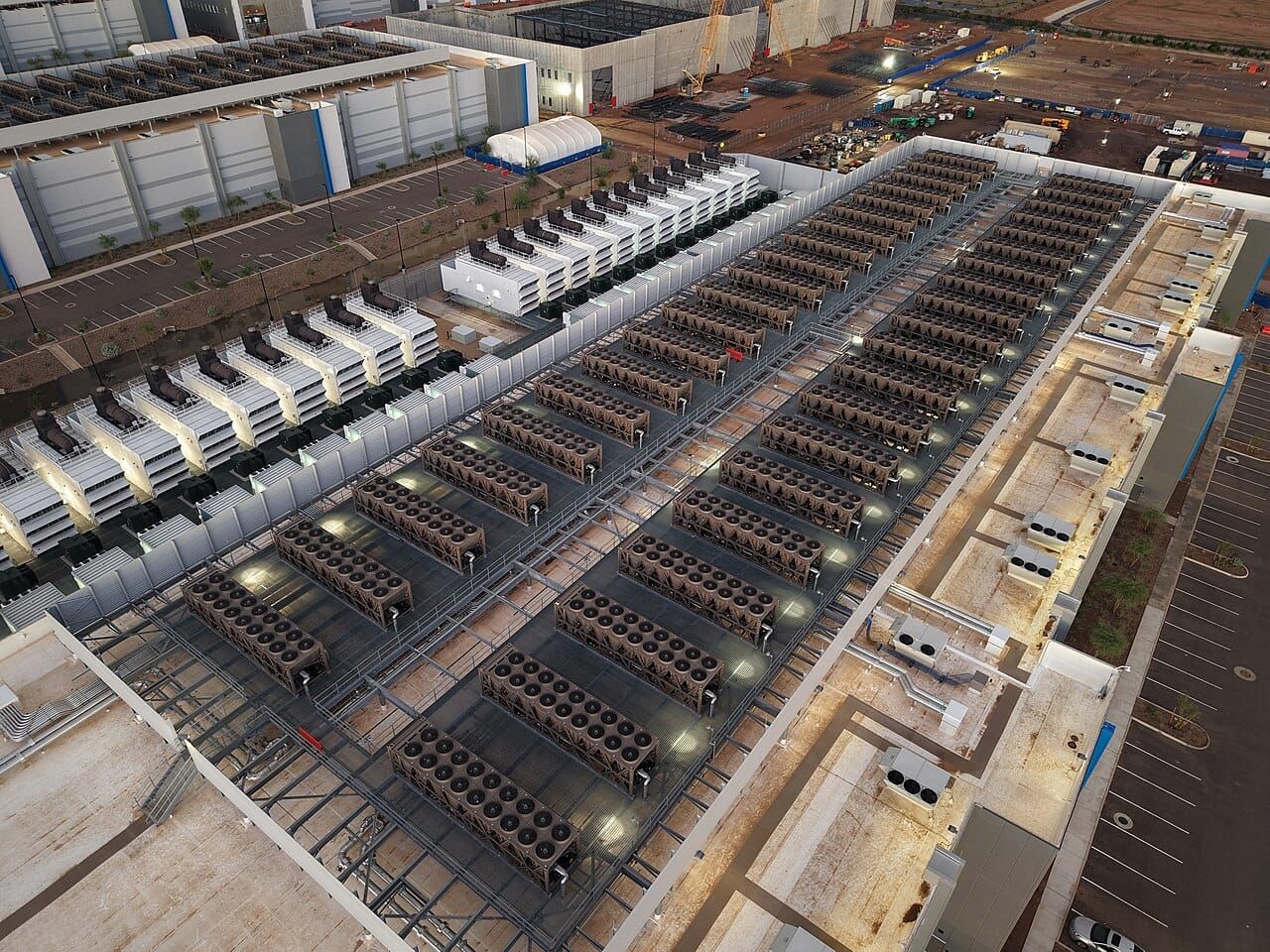
As is the case with double-stack trains, the benefits of data centers in helping to develop AI accrue broadly to America’s economy. But the data centers provide very little local benefit. Few tech jobs attach to them, and the construction jobs they bring are temporary. In addition, the data centers create many local harms and nuisances, including construction disruptions, traffic congestion, air pollution, and increases in electricity rates if the data centers pull power from the grid.
In addition, some people doubt that data centers are beneficial at all. Some economists argue that we are over-building data centers for an exaggerated AI boom. They predict that when the current AI frenzy subsides, we will be left with numerous massive, empty buildings. And many Americans are distrustful of AI altogether, both because of risks associated with the technology itself—AI run amok—and the threat the technology poses to jobs.
Local burdens, national benefits
Given these realities, the double-stack train experience suggests two lessons about the future of data centers. First, the fundamental desirability of AI generally and data centers specifically cannot be decided at the neighborhood level. Either AI and the data centers are worth having, or they are not. That basic decision must be made at the national level. We are beginning to have this debate right now. But whatever is decided by way of regulation, localities and states cannot be permitted to opt out of the costs of AI and yet retain access to the benefits of the technology.
When, instead of a broad national decision, AI’s future is decided piecemeal, through a series of local permitting and zoning fights over data centers, neighbors who will be negatively impacted have a conflict of interest. They will always prefer that projects like data centers be built somewhere else. Worse, deciding these issues locally means that local opposition will be most effective when the neighborhood affected is politically organized and influential. Data centers will then likely be built in poorer and less influential neighborhoods, even when that is not economically efficient.
However, the second lesson from the double-stack train controversy is that, while neighbors cannot have an absolute veto over new technology development, they need to have some say in the process in order to give industry an incentive to lower the costs imposed on nearby communities when projects are built. In the case of double-stack trains, the price of the settlement with the neighborhood included a promise by the railroad to build a new pedestrian bridge over the railroad tracks, funding for community enhancement and design concessions that minimized the impact of construction on local businesses.
In the case of data centers, concessions to local communities will likely include a commitment that the centers will be self-sustaining in terms of power generation, so that pressure on the electrical grid and corresponding price increases are reduced. In addition, data center developments may have to provide more local jobs and reduce environmental impacts.
This column is not about the pros and cons of AI. Rather, it is about how this nation should go about making decisions concerning new technologies and the costs that they inevitably bring. Unlike China, America makes numerous important development decisions at the state and local levels. This means that the debate over AI is playing out in part in debates over whether and where data centers should be built.
This is the wrong way to go about the AI decision. We should be debating the risks of AI and the extent to which it should be restricted or regulated directly, in Congress, not through scattered proxy debates over permits for data centers. If we as a nation decide that AI is worth having, then data centers have to be built. And, more to the point, they have to be built somewhere, even if we know that the neighbors affected will oppose them.