

Petrostates fade, electrostates rise
The world is planning how to phase out fossil fuels, with or without the U.S.

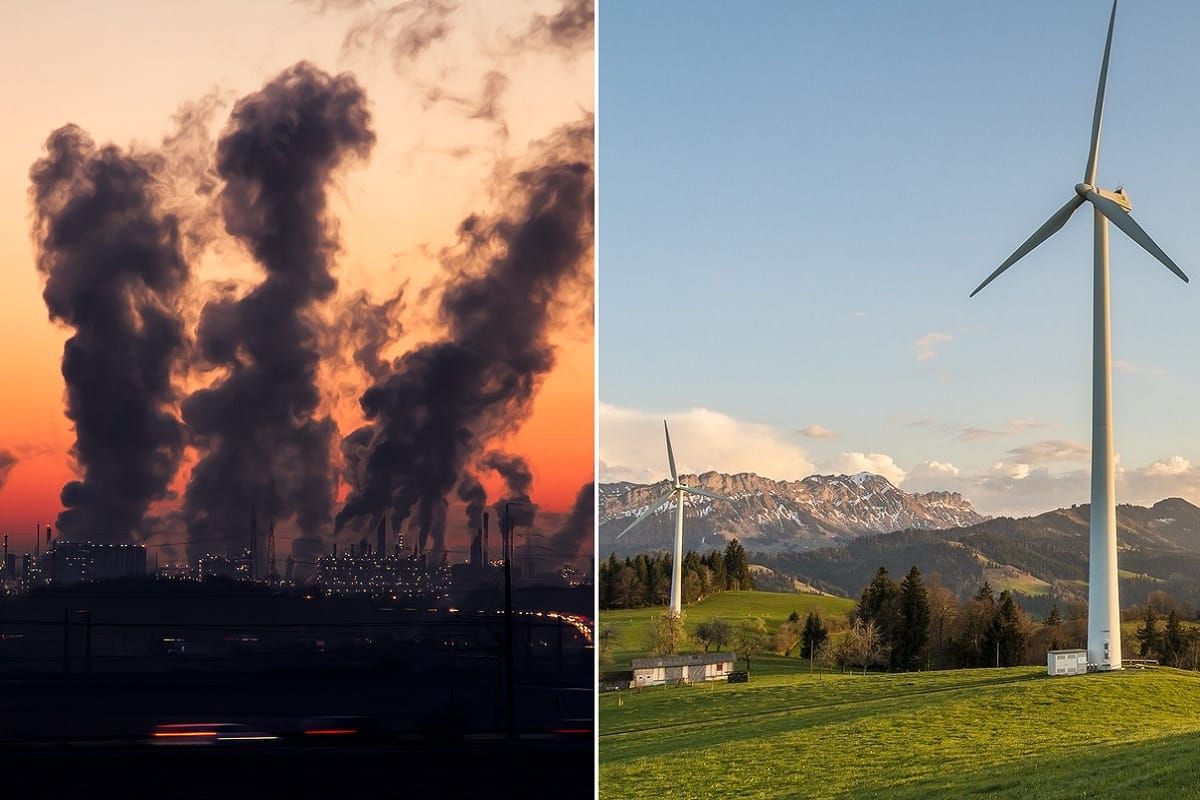
Climate change is already pressing down upon us. And as the world heats up and the seas rise, the United States is pouring gasoline on the blaze.
Donald Trump's administration will be reviled as the worst climate villains in history. They've closed their eyes and shut their ears to expert advice, pulling grants and slashing funding to silence scientists warning about the danger. They're not just scrapping existing incentives for renewable energy, but actively trying to obstruct new green-energy projects. We're in the throes of a crisis, and they're doing their best to make it worse.
All that is the bad news.
The good news is that the rest of the world isn't waiting around for us. Last month, fifty-seven countries came together to write a plan for phasing out fossil fuels for good.
These countries recognize that climate change is a looming reality, causing destructive extreme weather, famine and drought, refugee crises and war, and that poorer countries stand to suffer the worst from the heedless consumption of rich countries. They acknowledge the moral weight of the crisis and the urgency of ending our emissions before it gets any worse. They're building a roadmap toward a post-carbon economy, a fairer and more peaceful world powered by green energy, and they're doing it with or without U.S. participation.
If you didn't hear about this meeting in the media, there's a reason for that: America wasn't invited.
Meeting in Santa Marta
April 2026 was the first International Conference on Transitioning Away from Fossil Fuels, held in Santa Marta, Colombia and cosponsored by Colombia and the Netherlands.
The ICTFF arose from widespread frustration with the mainstream U.N. climate conferences (also known as the Conference of the Parties, or COP), which have been held annually since 1995 without achieving much. They've given us endless speeches and rhetoric, but little or nothing in the way of tangible accomplishments.
At the COP conferences, any agreement has to be unanimous, so petrostates and science-denying autocracies can block progress indefinitely. Even in the rare instances when a consensus is reached, such as the Paris Agreement, these deals are purely aspirational and non-binding. Countries can withdraw from them at will, or just fail to meet the pledged goals, and incur no penalty.
Recognizing that this process is broken by design, the nations that actually want to do something about climate change formed a "coalition of the willing". These are the countries that are willing to start phasing out fossil fuels now, without waiting for the rest of the world to come around.
Collectively, the ICTFF countries represent about one-third of the global economy. Notably, the conference organizers didn't invite the U.S., nor petrostates like the Gulf countries and Russia that have historically been obstacles to progress.
At the conference, Colombian president Gustavo Petro didn't mince words, calling our current paradigm of extractive capitalism "suicidal":
"There is inertia in the power and the economy of this archaic form of energy—fossil fuels—that lead to death. Undoubtedly, that form of capital can commit suicide, taking with it humanity and [other] life," he said.
The countries attending the ICTFF have moved past bad-faith debate on whether fossil fuels are causing climate change. They're talking about what they can do today to decarbonize their economies:
Some countries have already started working on roadmaps to phase out fossil fuels. Colombia published its draft plan last week and, on Tuesday, France became the first developed country to release a national roadmap to phase out fossil fuels, which included a timetable to remove coal from its national grid by 2027, end oil dependency by 2045 and fossil gas by 2050.
Other countries are taking steps as well. For example, Amsterdam has banned advertising for products that run on fossil fuels, including gasoline cars, airlines and cruises. The idea is to shift the Overton window and copy the tactics that worked against the tobacco industry.
One of the biggest questions that the ICTFF was convened to debate is how the world can finance a just transition for developing nations in the global south. Many of these countries are deeply indebted, and fossil fuels are their most valuable export. They're facing the dilemma of how to pay off their debt and buy vital imports, like medicine and fertilizer, without expanding oil and gas production.
Asia's Ukraine moment
Against this backdrop, the biggest story is America's colossally stupid war on Iran and Iran's blockade of the Strait of Hormuz. This conflict has cut off 20% of the world's oil and natural gas supply, most of which had been going to Asia.
The supply shock and overnight price spike was a rude awakening for Asian nations that depended on Mideast oil and gas. In this interview with Deutsche Welle, energy analyst Sam Geall calls it their "Ukraine moment". First Europe, and now Asia, have realized the folly of basing their economies on a volatile commodity that can be cut off at the whim of a dictator.
And Asia is responding. The magnitude of the crisis has broken through political inertia and cut across partisan divides. As the DW story puts it, "decisions that might have once taken years are being made in weeks".
Indonesian President Prabowo Subianto is calling for the conversion of the country's 120 million polluting, gas-powered motorcycles and scooters to run on batteries. In Vietnam, an industrial conglomerate is canceling what would have been the country's largest gas-fired power plant and planning to replace it with renewables.
Egypt, the Philippines, and South Korea have all announced ambitious new solar projects. Japanese Prime Minister Sanae Takaichi has called for Japan to become self-sufficient in energy, which may involve a mix of new renewable energy and restarting nuclear plants.
But the nation best positioned to benefit is China.
As I previously wrote on OnlySky, China has a commanding position in the renewables supply chain. While it still consumes large quantities of fossil fuel, an end is in sight. Chinese factories can crank out an astonishing one terawatt of solar panels per year, powering its own green transition as well as other nations'.
China is becoming the world's first "electrostate"—the modern alternative to a petrostate.
Electrostates are countries that use electricity, rather than fossil fuels, as their primary source of energy. Electrostates generate clean, cheap, uninterruptible power from solar panels, wind turbines, hydropower and nuclear plants. They invest in rare-earth minerals, battery technology, and semiconductor manufacturing. Their citizens travel in electric vehicles and use electric appliances (like heat pumps) at home.
But even if China wins the race to be the first electrostate, it won't be the last. The Iran war has supercharged the green transition. Independence from fossil fuels is now the prize that every nation has its eye on. And in one of the most colossal ironies of history, Donald Trump may well end up being the one responsible for it.
That's not to say that he'll deserve any credit, since it was completely by accident. Not only was it not his intent, he was trying to achieve the opposite.
Even if his administration accelerates the world's path to decarbonization, it won't have been through skillful diplomacy, nor through inspiring leadership. It will have been through actions so ill-conceived, so reckless, so irrationally destructive, that they exposed the terrifying fragility of the supply chain and spurred the world to dump fossil fuels out of sheer self-protection.