

The future of independence is interdependence
Every one of us depends on others; the only difference is how visible that dependence is.
I spend most of my life in one room.
At first glance, that may not sound much like independence.
I cannot easily walk through my house. I need my husband’s help with some ordinary tasks. My daughter brings me things from the outside world. Groceries, medications, meals, and almost everything else arrive through the door. I use mobility equipment, delivery services, remote appointments, adaptive tools, and an improbable number of charging cables.
My room has been engineered around what my body can and cannot do.
There is an adjustable bed, a trapeze bar, a stability pole, shelves within reach, rolling carts, grabbers, remotes, and devices mounted to the wall. A small keyboard has a grip attached so I can hold it without dropping it. My tablet docks beside the bed. Bags hang from improvised hooks.
None of this happened all at once. The room evolved through years of trial and error, frustration, invention, and help from people who love me.
It would be easy to look at this arrangement and see dependence. But I look at it and see a functioning life.
From this room, I write articles, attend appointments, talk to friends, manage projects, edit essays, and take classes in graduate school. The assistance and technology surrounding me do not prevent independence. They make my version of it possible.
This only sounds contradictory because our culture has adopted a bizarre definition of independence: doing everything yourself, without visible assistance.
By that standard, almost no one is independent.
The myth of the self-sufficient person
We imagine a capable adult as someone who earns their own money, drives their own car, maintains their own home, and handles their own problems. This person may participate in society, but they are not supposed to need it too much.
Yet the supposedly self-sufficient person wakes in a home built by other people, turns on electricity delivered through a vast public infrastructure, drinks water transported through municipal pipes, eats food grown and shipped by strangers, and drives on roads they did not construct.
They rely on mechanics, doctors, pharmacists, sanitation workers, software developers, farmers, warehouse employees, electricians, and thousands of people they will never meet.
Increasingly, they also rely on algorithms. Phones provide directions. Calendar alerts remember appointments. Search engines retrieve information. Apps deliver food, transfer money, refill prescriptions, and summon transportation.
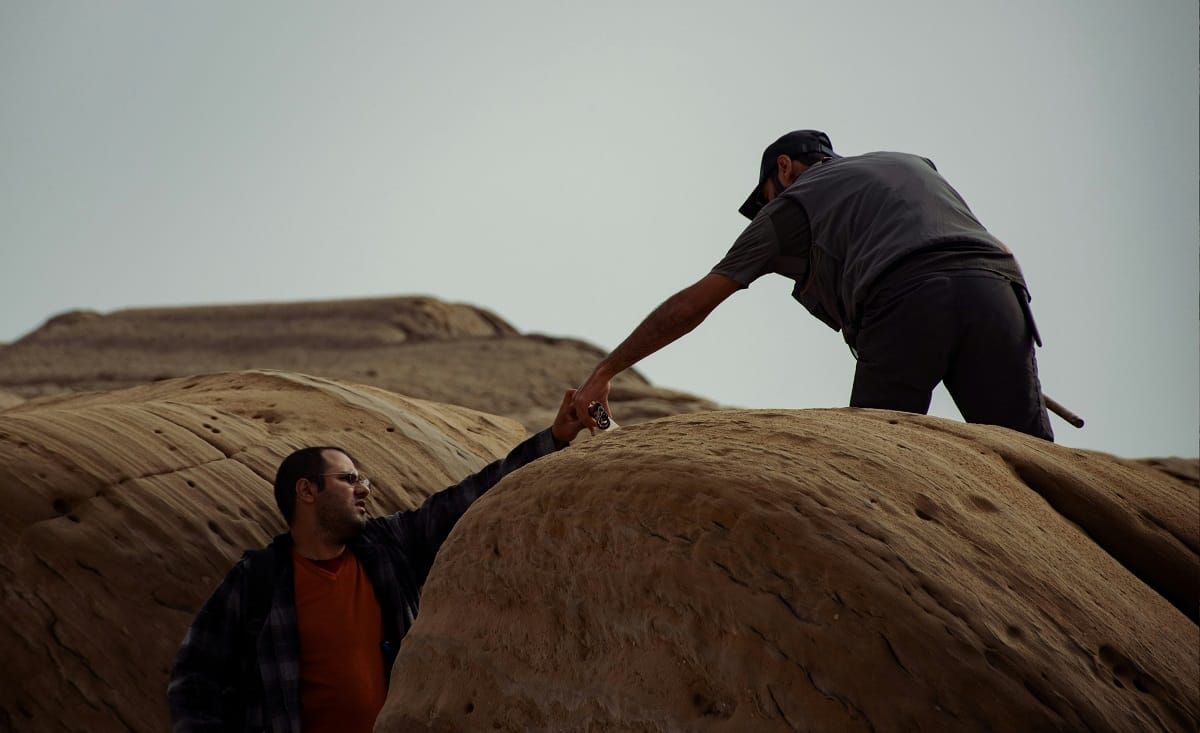
The difference between their dependence and mine is not that mine exists. It is that mine is visible.
Socially acceptable dependence
Our culture is selective about which kinds of assistance count as evidence of inadequacy. A person who drives to the grocery store is considered independent, although the car depends on fuel, roads, mechanics, insurance, and a global manufacturing network. A person who orders groceries because they cannot walk through the store may be considered dependent.
A wealthy person can outsource cooking, cleaning, transportation, scheduling, and shopping while remaining a model of success. A poor or disabled person who needs help with the same tasks may be expected to prove they have exhausted every other possibility.
The distinction is rarely about whether assistance is involved. It is about whose assistance has been normalized, purchased privately, concealed, or transformed into status.
Some people have the privilege of making their dependence invisible. Disabled people often do not. Our wheelchairs, canes, aides, ramps, medication organizers, and modified environments announce that human beings require support. This may make people uncomfortable because it undermines the fantasy that they do not.
Assistance versus agency
Part of the problem is that we confuse independence with autonomy. They're not the same thing.
Independence, as our culture usually defines it, means completing a task without help. Autonomy means having meaningful control over your own life. Sometimes that requires assistance.
I may need someone to bring an object across the room, but I still decide what I am doing with it. I may need my husband to drive me somewhere, but I still choose where I am going. I may rely on technology to work, but the thoughts and decisions remain mine.
A person can complete every physical task alone while having very little control over their life. Another can require extensive assistance while directing their care, maintaining relationships, creating work, and participating fully in the world.
Doing something without help is not the highest form of human functioning, but often, merely the least efficient. Disabled people learn this quickly because insisting on doing everything ourselves can consume an entire day’s energy, increase pain, create danger, or make the rest of life impossible.
I could use much of my limited strength trying to prove I do not need assistance. Or I could accept help and use that strength to write. I know which one produces a life I want.
Human survival has always been openly collective. People hunted, farmed, built, cooked, raised children, cared for the sick, and protected communities together. The fantasy of total self-sufficiency is not a description of human nature. It is a cultural story.
Disabled people understand this particularly well because we know that functioning is conditional. A person can be capable in one environment and unable to function in another.
A staircase can turn a mobile person into an immobile one. Captions can transform an inaccessible video into an accessible one. A flexible schedule can make employment possible. A delivery service can be the difference between having groceries and going without them.
Ability does not reside inside an individual body. It is created by the surrounding world.
The same principle applies beyond disability. Parents function differently when childcare is available. Workers function differently when they have paid leave. Older adults function differently when transportation and home assistance are available. Students function differently when they have reliable internet access.
The future can't afford the fantasy
The future will make our interdependence increasingly difficult to deny.
The world population is aging. More people will live with chronic illness, mobility limitations, cognitive changes, and the ordinary physical consequences of getting older. At the same time, families are smaller and more geographically dispersed. Many people will not have an adult child nearby who can absorb hours of unpaid care.
Meanwhile, healthcare, housing, transportation, and workplaces remain designed around an imaginary person who is healthy, mobile, cognitively consistent, technologically competent, and endlessly available.
We can continue treating every person who needs help as an individual crisis, forcing families to improvise private solutions until caregivers are exhausted and the people receiving care are isolated. Or we can admit that needing support is a predictable part of being human and design society accordingly.
That would mean accessible housing, reliable transportation, flexible employment, paid caregiving, affordable assistive technology, better home healthcare, and support that arrives before people reach a breaking point.
Climate instability will make the lesson unavoidable. Extreme heat, fires, floods, power outages, and disrupted supply chains reveal how thoroughly everyone depends on functioning roads, clean water, electricity, communication networks, pharmacies, emergency services, and neighbors willing to check on one another.
Resilience does not come from pretending everyone can survive alone. It comes from having strong networks of support.
Technology is also interdependence
Technology may allow more people to work, learn, communicate, receive healthcare, and remain at home longer. Smart devices can control lights, lock doors, provide reminders, call for help, and reduce the physical effort required for everyday tasks.
Artificial intelligence may help people organize information, navigate bureaucracy, translate language, and compensate for some cognitive or physical limitations. Robotics may eventually assist with lifting, mobility, household work, and personal care.
But technology will not eliminate dependence. It will create new forms of it.
A smart home depends on electricity, internet service, software, manufacturers, cybersecurity, technical support, and affordability. A robot caregiver will still require maintenance, oversight, funding, and ethical rules.
The better question is how technology can help people exercise greater autonomy within the relationships of dependence that already exist. It can also make care more sustainable instead of leaving every need to an exhausted spouse, daughter, friend, or neighbor.
Care is infrastructure
We usually speak of infrastructure as roads, bridges, power lines, water systems, and broadband. But care is a form of infrastructure too.
Without childcare, eldercare, healthcare, disability support, and domestic labor, the rest of society does not function. Yet care is largely absent from our dominant image of independence.
A person may appear self-sufficient because someone else schedules appointments, cooks meals, cleans the house, manages medications, or notices when something is wrong. That work is often underpaid, unpaid, or invisible.
Care is exhausting. A relationship of dependence can create unequal power. Families can be loving, willing to help, and still overwhelmed. People receiving assistance can be controlled, infantilized, neglected, or abused. That is precisely why care cannot remain invisible.
When we recognize it as essential infrastructure, we can build compensation, safeguards, alternatives, and accountability into it. We can protect both the autonomy of the person receiving care and the well-being of the person providing it.
What my room actually proves
A society designed for interdependence would not force people to become catastrophically ill before they qualified for support. It would not require disabled people to repeatedly prove incapacity in order to receive tools that increase their capacity.
It would recognize that accessibility benefits far more people than those carrying an official diagnosis. It would make remote participation ordinary, build homes people could continue living in as their bodies changed, and ensure that receiving care did not require surrendering dignity or control. It would also stop dividing people into helpers and helped, contributors and burdens.
I need help with many physical tasks. I also write, coach, organize, advise, make people laugh, and contribute to the lives of people around me. Support does not flow in only one direction. It moves through relationships in different forms at different times.
My life works because I stopped measuring success by how convincingly I could imitate a person who needed nothing. I accept help. I use tools. I rearrange the world within reach. I depend on people in some ways, and they depend on me in other ways.
The independent individual has always been imaginary, and disabled people already know this. Independence does not mean needing no one. It means having enough support to direct your own life.
The future of independence is not isolation.
It is interdependence, designed deliberately, rather than denied.