

Five hypotheses about Mojtaba
Possible scenarios for the future of Iran under the younger Khamenei.

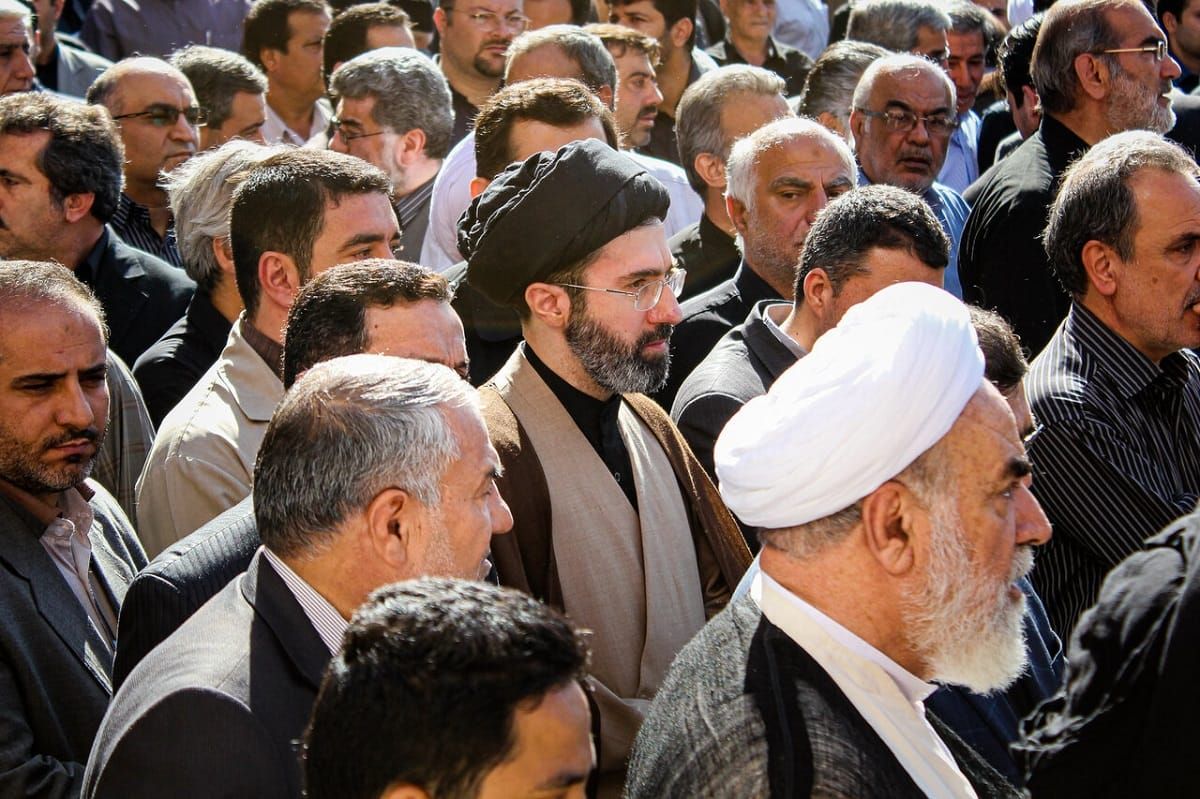
As I write these words, there are many unanswered questions about Mojtaba Khamenei, the third Supreme Leader of Iran who ascended to that position after his father was assassinated by a joint U.S.-Israeli bombardment operation. Is he actually alive? (Most probably, yes.) Is he in a coma? (Most probably, no.) Is he actually in control of the country, or is he being isolated by an unknown actor or actors who are ruling in his stead? (Maybe.) What is his ideology—is he more radical or more pragmatic than his father? (No one really knows.) Will he be killed like his father if the current fragile ceasefire fails, thus making writing this article a completely futile exercise? (Probably.)
Despite all these unanswered questions, I still want to examine what his leadership might look like if he remains Iran’s Supreme Leader for the foreseeable future. In order to do so, I will examine five hypotheses about Mojtaba that are theorized by smart people, and I will try to guess how likely they are to be correct.
Number 1: The MBS hypothesis
I first heard this hypothesis on the day that Ebrahim Raisi, Iran’s former president, was killed in a helicopter accident, from a very famous and respected Iranian journalist who shall remain unnamed. We were speaking about potential choices for the next Supreme Leader and unaware of how fragile mortals are, I was making my case that Raisi was obviously the successor, and that I think Mojtaba is a meme and will never be the Supreme Leader.1 This anonymous journalist said that Mojtaba was a serious contender for the job, and specifically the choice of moderate and pragmatic conservatives. He was the first person to compare Mojtaba with Muhammad bin Salman, the Saudi crown prince and the de facto ruler of his country. In this model, Mojtaba would be someone who tries to mend ties with the U.S. and the West, restart the engine of development and also enact some social reforms (e.g., no hijab law enforcement) but at the same time, severely limit political freedoms such as freedom of press or speech.
For fans of the MBS hypothesis, or basically, anyone who wants to see a reformer or a pragmatist in Mojtaba, the very fact that he was chosen as Supreme Leader is evidence for their claim. These people argue that the Assembly of Experts, a body of clerics who are tasked with choosing the next Supreme Leader, went against the will of the late Supreme Leader who had said that the next Supreme Leader should not be a relative of his and had spent days pressuring Mojtaba to accept the position despite his unwillingness to do so,2 but why? Well, the idea is that if Iran is to make a deal with the US and then significantly change course, only Mojtaba would be the person to do so. Not only a deal, but even an end to the war while Trump is alive would mean that Ali Khamenei would be unavenged, but since Mojtaba is his son, he’s in a position to “forgive” his father’s killers. Mojtaba is the only person who can significantly change Iran’s direction domestically or internationally without incurring the wrath of regime loyalists.
This hypothesis would make sense if we assume Mojtaba himself is open to being a pragmatic reformer. I’ve seen no evidence for this, and I don’t know if this is wishful thinking or not. I know that regime radicals really wanted him to be his father’s successor and celebrated jubilantly when he was named. But of course, the proponents of the MBS hypothesis say that these people know nothing about Mojtaba’s ideology or alliances and are just happy that their beloved leader’s son is chosen.
Ultimately, I hope to be proven wrong, but this argument isn’t very convincing to me for one simple reason: None of these people says that they know that Mojtaba wants to be an MBS-style reformer; they just argue that it makes sense for him to be one. Well, I’m skeptical. No one knows what this man thinks about anything. For his entire life, he’s been nothing more than a glorified message delivery boy for his father, and I think Occam’s razor dictates that the son of Ali Khamenei isn’t meaningfully different from him. I’d like to see more evidence before jumping on this bandwagon.
Number 2: The young leader hypothesis
This is another hopeful hypothesis, but one that relies on fewer unsupported assumptions, which is why I personally find it more convincing than the former. This hypothesis argues that it doesn’t matter whether Mojtaba is more or less radical than his father; he’s going to acquiesce to a deal with the U.S. and agree to some reforms simply because he’s younger.
This argument states that the main difference between Ali and Mojtaba is that one is at the beginning of his leadership and the other was at the end of it. Ali, at 86, was more concerned with his legacy and his place in history. He didn’t want to put his name on a deal he considered humiliating, even if he had come to the conclusion that such a deal was inevitable. Shortly before his death, he was approached by three powerful men within the regime (the late Ali Larijani who was the secretary of Iran’s Security Council, Mohammad Bagher Ghalibaf who’s the chairman of the parliament, and Abbas Araghchi, the foreign minister) who argued that it had become impossible to run the country and he had to accept a one-sided deal with the United States. Khamenei didn’t challenge their reasoning, but asked them to wait for him to be killed in the next round of war before making the deal.3
Of course, the actual results of the war have (so far) strengthened Iran’s hand, so it seems that particular deal is off the table anyway. But regardless, Mojtaba will be facing a very different situation than his father. He’s not 60 yet, so it’s conceivable that he’ll rule Iran for about twenty-five years. Why would he become the Supreme Leader if he’s going to preside over ruins? Is he going to accept perpetual protests, economic devastation, and endless wars? That would only lead to a downfall of his regime, one way or another. Is that what he wants?
We need to keep in mind that even Ali wasn’t this stubborn for most of his leadership. In 2003, he was ready to accept a comprehensive deal with the US which would have been completely unthinkable today.4 And although much more reluctantly, he accepted JCPOA. There are many factors involved here, but in 2003 he was 64. He was afraid that the U.S. might attempt to occupy Iran after it was done with Iraq, and he felt he had too much to lose.
The realities on the ground are clear: Iran’s economy is almost completely destroyed. People are angry and the vast majority want the regime to go. While Iran showed some impressive resilience, it won’t be able to withstand further war if the U.S. and Israel decide to target critical infrastructure. He has to accept that some changes are necessary if he wants to have a country to rule over. Therefore, even if Mojtaba is not some secret pragmatist reformer, he has to accept reality.
And in the end, the history of the Islamic Republic is filled with former radicals who had to accept reality when they seized power. Even arch-pragmatists such as Ali Akbar Hashemi Rafsanjani, Hassan Rouhani, and Mohammad Javad Zarif started as anti-Imperialist firebrands in the early years of the revolution. More recently, Mahmoud Ahmadinejad, Ali Larijani, and Ali Bagheri Kani were strong opponents of reform and détente who changed tunes (to different degrees) after they were put in charge and had to actually run the country.
This scenario is much more believable than the previous one, since it doesn’t make too many outlandish assumptions. It simply assumes that Mojtaba is a rational man and makes rational decisions when faced with the overwhelming force of reality. Of course, we all know that ideology can be a very strong force, stronger than rationality. Are we actually correct in assuming Mojtaba is rational? This is a perfect segue to the next hypothesis.
Number 3: The martyr hypothesis
Martyrdom is a very important belief for Shia Muslims. During the Iran-Iraq War in the 1980s, soldiers genuinely became upset if they survived battles, considering it a sign that they weren’t favored by Allah. When people say that Ali Khamenei or Ghassem Soleimani or most of these people wished for and prayed for an unnatural death, I believe them. It’s very easy to believe that a sincerely devout Shia prefers to die at the hands of the enemy. This is, of course, not very good news if you happen to be ruled by these people. I don’t think that the powerful men in the Islamic Republic are comparable to death cults such as al-Qaeda, but I think they are a little bit too comfortable with killing and dying. I think this has had tangible results in the day-to-day lives of Iranians.
So, what if Mojtaba has decided that he doesn’t want to live and rule a country at all? What if he’s just seeking martyrdom? Or what if he doesn’t mind martyrdom, and therefore he’s completely unwilling to moderate on any of his father’s positions, or worse, what if he ends up making even more radical decisions? Israel killed Hashem Safieddine before he could be formally named as the leader of Hezbollah after they killed his cousin, Hassan Nasrallah. I don’t think Safieddine didn’t know this was the likeliest scenario when he agreed to be the next leader; he just wanted to continue on the same path, regardless of consequences. What if Mojtaba is the same?
So far, Iran has used groups like Hamas, the Houthis, and Hezbollah, but it hasn’t behaved like them. Iran has consistently tried to keep war out of its own borders, has (mostly unsuccessfully) tried to achieve economic and scientific development, and has tried to have normal relations with every country except Israel and to a lesser extent, the U.S. In short, despite the historical allegation, Iran has been trying to act like a state, albeit a very ideological one. What if this changes? What if Iran starts acting like those quasi-states that control a territory, but don’t act like a real state, but rather an insurgency group? It’s easy to imagine such a scenario: an Iran without electricity or running water, without a formalized police force to prevent riots and lootings, but with enough loyally suicidal foot soldiers to continue to make shipping in the Strait of Hormuz impossible. Is this what Mojtaba wants?
I don’t buy this myself either. I don’t think Mojtaba is content with the Islamic Republic becoming another Hamas or Hezbollah, for which the only measure of success is whether they were wiped off to the last soldier or not (which makes failure basically impossible) and it doesn’t matter that their casualties are ten-fold the enemy’s. I think Mojtaba, like his father, wants Iran to be the region’s top economic power and to boast about Iran’s scientific advances.
Now, I don’t have any hard evidence to back this up. As I said, no one has any real idea what goes on in the man’s head. But I think the few days of his leadership are a kind of soft evidence: For one thing, it’s completely clear that there’s a strict directive from above that hijab laws shouldn’t be enforced anymore. Not only are women not being arrested for not wearing hijab, but official spokespeople of the regime, including Friday Prayer imams, have changed their rhetoric over this issue. (One Friday Prayer imam attacked women without hijab and was subjected to consistent criticism—not from reformists or pragmatists, but his own peers.) Also, Iran is making a good faith effort to strike a peace deal with the U.S. Iran might make mistakes in these negotiations—including overvaluing its own victories, or overestimating how much pressure Trump is truly under—and these mistakes might lead to the talks failing, but Iran is not acting like a fundamentally irrational actor. Of course, maybe Mojtaba is sidelined by pragmatists and will redirect Iran to a different route once he emerges, but I find that unlikely. It’s much safer to assume talks are happening with his blessing unless hard evidence is presented.
Number 4: The figurehead hypothesis
This one states that Mojtaba is not actually the one in power, but that he’s a puppet and someone else is making the decisions behind the scenes. This power behind the throne can be the IRGC as an institution, Ahmad Vahidi, or Mohammad Bagher Ghalibaf. Some people argue that this is going to be the reality of Iran under Mojtaba—that certain actors are planning to meaningfully reduce the role of the Supreme Leader in Iran’s decision-making process and to make the role a symbolic one. This goes beyond the idea that Mojtaba is not very powerful now, which is an argument that makes sense. It goes beyond that and says he’ll always remain weak.
Well, if they do have such a plan, they’re going to fail. I’m not surprised that Mojtaba might have less power compared to his father at the moment, but it’s here that his relative youth is a major factor. If he has 25 years to rule, he has 25 years to solidify his power, and his position comes inherent with almost endless power: he can dismiss anyone with the stroke of a pen. Do IRGC commanders want to control him? Well, he can dismiss all of them and replace them with weaklings who owe everything to him. He can block Ghalibaf’s way from keeping his position as chairman of the parliament, or if he wants to become president, he can block his path. Unless these aspiring Cardinal Richelieus want to quickly change the constitution, the position of the Supreme Leader comes with so many legal powers that no one can sideline him. It might take Mojtaba a while to fill important roles with loyalists, especially if he tries to be patient and not rock the boat too much, but it will be a trivial task.
You have to remember that Mojtaba’s father was also meant to be a puppet. Akbar Hashemi Rafsanjani, who was basically the second most powerful person after Khamenei's predecessor Ruhollah Khomeini, engineered Khamenei’s ascension to the position of the Supreme Leader, thinking that he’d be weak and malleable and so Hashemi Rafsanjani could reign as the real power behind the throne. And after becoming president, he actually was a very powerful figure, basically running the country by himself.5 But then he died having lost almost all of his major posts and being barred from running for president again, with Khamenei as the indisputable man in control. It took Khamenei a few years to sideline Hashemi Rafsanjani, and he had some self-imposed limits on how rapidly he seized power; for example, he didn’t remove any of Ruhollah Khomeini’s appointees from positions of power unless they died or resigned. The point is, if Mojtaba is aggressive enough or lives long enough, he’ll eventually end up as powerful as his father. Anyone trying to be the “real power”—whether Vahidi or Ghalibaf—will lose. The game is simply too rigged.
Number 5: The dead man hypothesis
This one is more of a funny conspiracy theory: what if Mojtaba is actually dead? They haven’t produced any footage of him, or even a recording, and it’s extremely obvious that he’s not the one writing his statements. In his first statement as Supreme Leader he forgot to mention his own mother among those killed in the attacks, and in a hilariously Orwellian move, the state media claimed afterwards that Khamenei’s wife was actually discovered alive.
What if he’s dead? Well, I guess a rational explanation for why they would pretend that a dead man is the Supreme Leader would be the ability to sign a peace deal with the U.S. Again, from both a religious and a political standpoint, no one would question a son giving up on revenge for the father’s blood, and a Khamenei can bury a Khamenei’s legacy and policies. In this scenario, whenever a peace deal is signed and Iran has solved its problems with the U.S., they’ll wait a plausible amount of time and then announce that the third Supreme Leader has sadly succumbed to his wounds and is now in Heaven or something.
This scenario is very kooky and hilarious, but it feels too outlandish to be accepted without very strong evidence. Of course, I struggle with the two reasons mentioned about why he’s been in complete hiding and isolation. The first reason is that his wounds are very severe and unsightly and he can’t be seen for that reason, The Phantom of the Opera style.6 It’s hard for me to swallow this because people who are wounded in the war are revered in Shiism, and I don’t know why he has to look good or healthy for his position. His father was also severely wounded and couldn’t use his right hand after an assassination attempt.7 The second reason is that they’re afraid that producing any footage of him will give his location away to Americans and Israelis and he can be assassinated. Again, I think it’s pretty obvious that these assassinations are carried out by very advanced technologies, including state of the art spy satellites and AI recognition, and I highly doubt that anyone in Iran can actually hide from the U.S. or Israel.8
Still, while I don’t find the stated reasons for hiding Mojtaba plausible, it’s much more plausible that I’m wrong, or that they’re hiding Mojtaba for the wrong reasons, than the entire Islamic Republic being involved in some farcical Weekend at Bernie’s shenanigans.
Conclusion
I think that the likeliest scenario under Mojtaba is that he’ll be presented with the realities on the ground, he’ll make peace with Trump, and he’ll enact some minimal reforms. Those reforms will extend far enough to ensure the survival of the regime and maybe to make economic recovery possible, but I highly doubt that they will be very structural or deep. I think those reforms will be mostly economic and cultural and social, but politically non-existent to minimal.9 In the first years we will read about people jockeying for power (grow used to hearing the name Ghalibaf), but after a few years, he’ll be as powerful as his father was.
The other scenario is, of course, that Mojtaba will seek the delicious juice of martyrdom, and that causes him to reject any meaningful reform. In that case, either he will be quickly killed in the next round of war, or he’ll oversee the downfall of the Islamic Republic in a painfully protracted process of Iran becoming a failed state. I find this scenario also quite plausible and likely. I hope it’s less likely than the former scenario.
Other scenarios are far less likely, including Mojtaba surprising us by revealing himself a moderate pragmatist after all and aggressively pursuing structural reforms. I’d love to be proven wrong though.
1 I don’t think that I was wrong, despite what happened. I won’t get into my reasoning but I’m still pretty certain that Mojtaba wouldn’t have been chosen if his father had died a natural death. ↩︎
2 I obviously can’t reveal my sources, but I know both of these to be true from trusted people. ↩︎
3 Similarly to the last footnote, I can’t say how I know this. ↩︎
4 George W. Bush rewarded this move by naming Iran as a member of the axis of evil. ↩︎
5 Tragically for Iranians, almost all of his major decisions during these crucial years were disastrously wrong. As an analyst said after his death, Akbar Hashemi Rafsanjani spent the last years of his life trying to undo his own mistakes. ↩︎
6 I keep imagining him looking like Adam from the series Dark. ↩︎
7 Although he did refuse to have his hand amputated despite the doctors’ recommendation, because it would look too unseemly. So maybe I’m just wrong. ↩︎
8 If you watch documentaries about Bin Laden’s assassination, you’ll see how there was maybe at most 5% human intelligence in tracking and killing him and the rest was pure technology. Now add in the fact that the technology has been advancing since 2011, and none of these people felt a need to hide their location about a year ago. I’m pretty sure that while some spies in Iran were involved, Israel has been tracking all of these people for years now, and now only relies on advanced technology and knows the exact location of every potential target. ↩︎
9 Some smart people disagree with this. A professor of sociology expressed her belief that the next presidential election will be the freest in history, with almost no major candidates barred from running. All I can say to that is that I’ll believe it when I see it. ↩︎