

Justice for survivors, from Cornell to #ChurchToo
The tides of culture are shifting toward believing survivors and exposing predators.

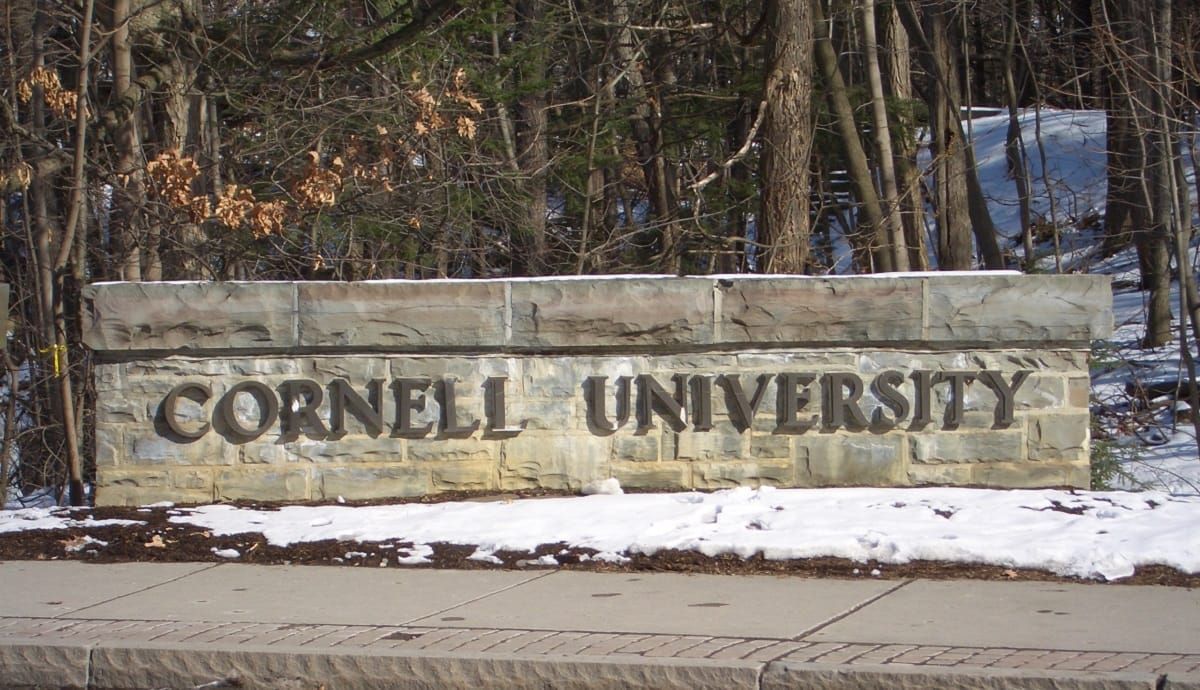

The Cornell 7 gang-rape case is sending shockwaves around the world. Students are marching and protesting to demand justice, stalled investigations are being reopened, and some are calling for the resignation of the Cornell administration or even for a complete ban on fraternities. But will all this amply justified outrage lead to any true consequences or a lasting shift in attitudes?
Comfort the afflicted and afflict the comfortable
As reported by Variety, "Following the news that a former Cornell student had accused seven men of raping and drugging her at a frat house party in October 2024—and none faced legal consequences—former South Park writer Toby Morton has launched a website dedicated to documenting the account of the woman (identified as Jane Doe), her lawsuit and the school’s response to the case."
Morton's website, TheCornell7.org, states its purpose as follows: "This site will document the account of the woman who was sexually assaulted by seven members of Cornell University’s Chi Phi fraternity in October 2024, the lawsuit she has filed, and the institutional response surrounding her case." In contrast to TMZ-style gonzo coverage designed to garner clicks, Morton says his goal is to build a comprehensive record that can withstand scrutiny.
Morton is following in the footsteps of the student journalists at The Cornell Sun who kept the case alive. His goal is to practice real investigative journalism, in lieu of the sanitized corporate whitewashing that too often passes as news. Before publishing names, photographs, documents, messages, and other evidence related to the case, he's taking pains to make sure that his information is as accurate as possible.
Like any satirist worth their salt, he's not holding back from speaking truth to power, regardless of whose social position and career could be impacted should their misdeeds come to light. Morton said in a statement on Instagram about his work that while he is “not a journalist,” that fact makes him “more dangerous.” “I have no limits, no boundaries, nobody to tell me I’ve gone too far,” he penned. He has no vested interests in this case, financial or otherwise. Nor does he have blind loyalty to the dudebro fraternity culture that for decades has swept many similar cases under the rug.
Simply put, his statements indicate he wants justice for sexual assault committed by those who believed they were above the law. In an era of corporatized media that too often protects perpetrators instead of supporting survivors, this grassroots activism serves as a beacon of hope that actual journalism is not completely dead.
Seeking accountability in Christian settings
As critics of the church know too well, it's not only the secular world where such abuses take place. Within institutional religion, powerful men have preyed on the voiceless and the vulnerable since time immemorial. But here, too, there are efforts to tear down the veil of silence and shame.
With the help and advice of Catholic abuse survivors, Protestant survivors of abuse created Protestant Accountability, a database of church leaders credibly accused of sexual abuse. Modeled after Bishop Accountability, a database collecting evidence of sexual abuse in Catholic settings, this website documents publicly available allegations of sexual abuse and misconduct within mainline and evangelical Protestant churches. Since its launch in August 2026, the site has grown to over 3,000 entries across 100 denominations.
While there are considerably more entries waiting to be published, as this is a volunteer operation with similar vetting protocols as the Cornell 7 website, these names will be added once the material provided has been properly verified. By diligently applying the basic rules of evidence, these sites continue the legacy of investigative journalism once performed by the mainstream media.
Glimmers of hope
While I still feel outrage when I learn of egregious abuses like the Cornell 7 case, I also find glimmers of hope—both when it comes to #metoo and #churchtoo abuses.
I've been a professional writer and religious satirist for over thirty years. In that time, I've lost track of how many times I've heard whisperings of abuse and predation within religious and spiritual settings, ranging from fire-and-brimstone fundamentalist clergy to allegedly enlightened peace-and-love gurus. (By comparison, I can count on one hand the number of reports crossing my desk that turned out to be false. Of the few that were, most can be attributed to some form of Munchausen syndrome or a toxic breakup of a consensual relationship.)
We had our share of fun satirizing the never-ending stream of stories about televangelists and megachurch pastors caught with their pants down. Even so, the vast majority of #churchtoo abuses remained hidden behind closed doors and were never reported or exposed. Even today, many survivors of mistreatment at the hands of these missional men are afraid to come forward. Frankly, I don't blame them. They witnessed how whistleblowers who brought abuses to light—such as those connected to people in the U.S. Emergent Church network—would be harassed, demonized, dragged through the mud, attacked as mentally ill, and worse.
Fast forward to today. In my book Gaslighting for God: A Satirical Guide to Save Yourself from Spiritual Narcissists, I included a case study highlighting how a church culture led by those with extreme narcissistic tendencies led to a plague of abuses within the Young Leaders Network in the 1990s, the culture that produced both Mark Driscoll and Emergent Village.
When I first posted this case study to my Substack, I noticed a dramatic shift in how people responded. I was no longer attacked for pointing out abuses committed by Christians who treated their celebrity status as permission to mistreat others according to their own sadistic whims. Instead, people began asking questions with an intent to learn the truth about figures they had once admired. Instead of being shamed and shunned, I was thanked for calling attention to these once-hidden abuses that were finally emerging into the light of day.
In a similar vein, I'm not seeing a witch-hunt demonizing survivors when the Cornell 7 and Protestant Accountability websites rolled out. Instead, there's a growing shift at the grassroots level: more and more people want to stop protecting perpetrators and start believing survivors. Hopefully, this is a sign that we can raise up our collective voices and finally bring down these corrupt elites and institutions, whether secular or religious, that continue to cover up abuse, discredit victims and protect those in power at all costs.