

Artemis II astronauts reflect on their historic mission
How does space change what we know about human emotions and our relationship with the planet?

For most of us Earthlings, it's difficult to imagine how it would affect us to look at the planet we call home from the vantage point of space. Could anyone have such an experience and be unmoved? Would it give us a merely aesthetic pleasure to see the entire Earth revolving in all its beauty?
Or would it do more than that—would it broaden our moral horizons? Would we feel a sense of connection toward every other human on the planet—or a sense of connection with every other species—to know that we're all tiny creatures living on the surface of a rock floating in space, all equally vulnerable and all facing the same challenges?
If only we had the chance, the experience of space travel might profoundly change our values. Would it make humans understand the value of life in all its rarity and fragility? Could that understanding put an end to war and other senseless acts of violence?
The closest we can get to answering these questions comes from asking people who have been in space, reflecting on these and other existential questions about humanity and what the future will bring.
A historic news conference
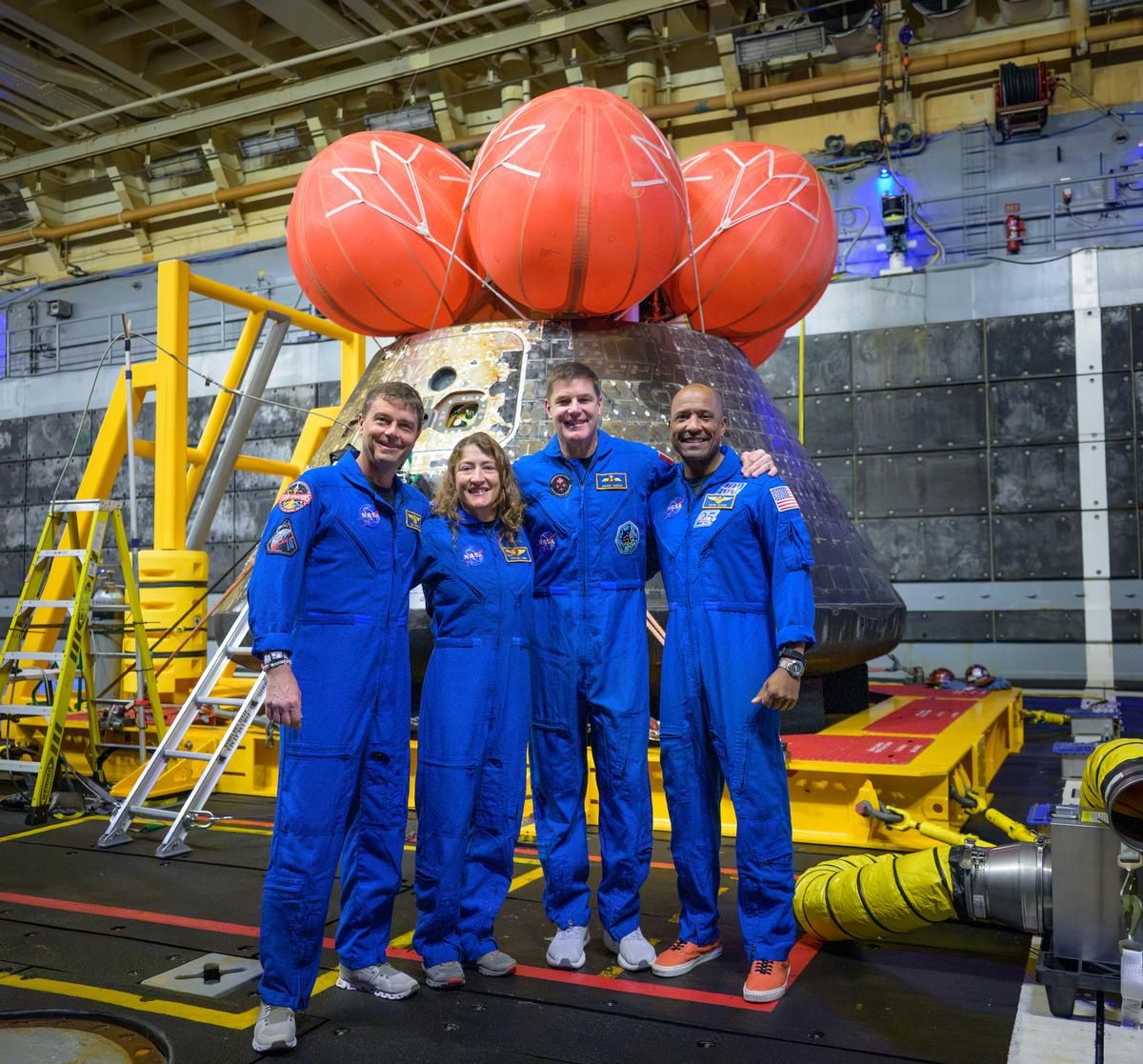
Last month, NASA held a news conference at its Johnson Space Center. The four Artemis II astronauts—Commander Reid Wiseman, Pilot Victor Glover, Mission Specialist Christina Koch, and Mission Specialist Jeremy Hansen—reflected on their historic ten-day mission around the Moon, marking the return of humanity to space exploration after over fifty years.
The Artemis II crew answered questions from journalists, discussed their mission, emphasized the importance of teamwork, and highlighted the overwhelming global support they received.
According to Reid Wiseman:
“... when we came home, we were shocked at the global outpouring of support, of pride, of ownership of this mission. I think at the beginning, that’s what the four of us wanted. We wanted to go out and try to do something that would bring the world together, to unite the world.”
The astronauts spoke about their awe and their profound emotional experience, as well as valuable technical feedback and cautious realism about cost, risk, and what comes next.
Speaking about the profound experience they shared, Wiseman recalled when they saw the Sun eclipsed behind the Moon. He turned to Glover, and said, “I don’t think humanity has evolved to the point of being able to comprehend what we’re looking at right now,” because it was otherworldly.
READ: Artemis II brings us one step closer to a Moon base, future missions to Mars
The Artemis II mission achieved several historic firsts: The first humans to travel beyond low Earth orbit since the Apollo missions, reaching a record distance of over 250,000 miles from Earth; the first woman, the first Black astronaut, and the first non-American (Canadian) on a lunar mission. The crew also described their unprecedented views of the Moon’s far side, reinforcing the mission’s symbolic and scientific importance for humanity.
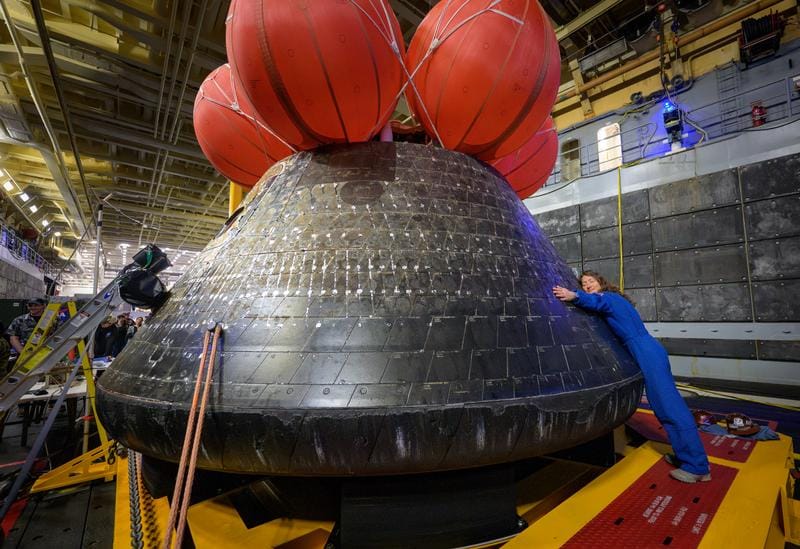
“I haven’t fully processed what we just did.” — Christina Koch, Mission Specialist, Artemis II
Toilet challenges and mission reflections
Jeremy Hansen offered his own touching reflections on Earth and humanity. He expressed a sense of gratitude, joy, and hope after seeing Earth from space. He spoke of his belief that humans are generally good, despite our occasional flaws:
“Observing out there, this depth to the galaxy that I just had never experienced before... and then you see the same thing with the Moon and the Earth. You’re viewing them from this new perspective, but this new perspective with three dimensional depth, and I have heard Christina talk about this a lot, we’re all kind of stuck by these things that make us feel small, and that the sense I had was the sense of fragility and feeling small, infinitesimally small, but yet this very powerful feeling as a human being, like as a group, and that is what I would try to share. I kept seeing that same thing and that same feeling small and powerless, but yet powerful together.”
Space travel has its mundane challenges as well as grand philosophical moments. Responding to a question from one journalist, Wiseman explained the challenges the crew had to face when the toilet vent line clogged after flushing, limiting waste capacity to under ten uses. In addition, the crew experienced cold conditions initially, until the heating systems could be brought online. He clarified that despite these minor issues, mission safety was never threatened:
“We had some vent line issues on the toilet that were a little bit problematic for us on the primary vent line. And then we had a few cautions and warnings that came up from time to time. We had a smoke detector go off on the next to last day… and that starts off an automated sequence of shutting down the ventilation and the power system, and that was tense. It wasn’t scary, but it was tense for a few minutes until we got things reconfigured.”
Mental health support and teamwork were a recurring theme for all four astronauts. The crew emphasized their exceptional communication and trust in each other. NASA had psychologists and psychiatrists on call to support the team's behavioral health and ensure peak performance during the mission.
According to Victor Glover:
“Everything we did up there was a four-person activity. Everything. How we ate, slept, flew the vehicle, and some of it was on purpose. A lot of it. We realized real-time when Jeremy exercised, we were all exercising. It was a team effort to the last, you know, period. That fifteen-minute checkout when you are talking to your family it did feel like being teleported out of the vehicle, but you teleported right back.”
The Artemis project is committed to the goal of diversity, choosing the best candidates without a bias toward any race or gender. Christina Koch talked about her hopes that it will usher in an era of inclusive exploration, honoring decades of decisions that allow all dreamers to pursue their goals.
The astronauts, understandably, were focused on the success of this mission. However, some questions remain about cost and sustainability. Each Artemis mission costs billions of dollars. In particular, the Space Launch System (SLS) has been criticized for its expense and lack of reusability, compared to commercial alternatives. Some wonder if NASA will transition to private-sector systems such as SpaceX’s Starship.
For now, the astronauts concluded by emphasizing once more the human element, the human experience, the emotional bond which all four of them shared, and the importance of trust, communication, and resilience, all of which were framed as essential complements to the technology and engineering for future missions to the Moon and Mars. Here, I will just say: Ad astra! Which, in Latin, means: To the stars!