

Accessibility should be boring
People with disabilities should get to go to the beach, too.
.jpg)
I recently learned about accessibility mats on beaches because a man was complaining about the “pussification” of America.
He had filmed a video while walking along one of the mats, apparently under the impression that it existed because people no longer had the fortitude to burn their feet on hot sand.
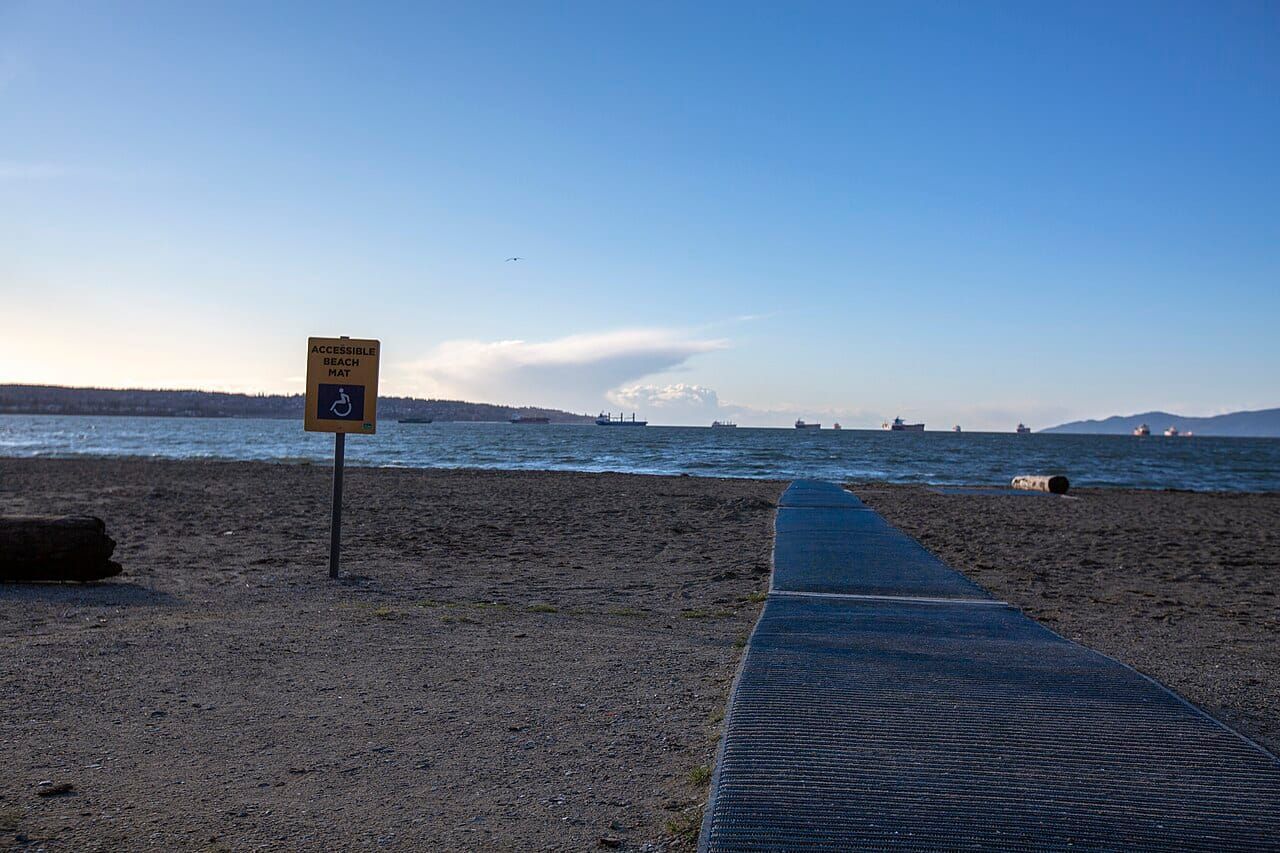
A disability advocate stitched his video and explained that beach access mats allow people who use wheelchairs and other mobility devices to cross sand. They are also useful for parents pushing strollers, families pulling wagons, and people rolling coolers.
Then she asked the obvious question: What is wrong with not wanting to burn your feet?
Finally, she pointed out that the man was walking on the mat while he complained about it.
It was a perfect demonstration of what happens when accessibility works well. People use it without thinking about why it exists. The infrastructure supports them so seamlessly that they mistake their own ease for rugged self-sufficiency.
He was not trudging bravely across the burning sand. He was strolling along a stable surface that had been built partly for disabled people while complaining that other people had become too soft to walk on burning sand.
Accessibility is often discussed as if it benefits a tiny group of people at everyone else’s expense. In reality, accessible design improves life for many people.
Curb cuts allow wheelchair users to cross streets, but they also help people pushing strollers, pulling luggage, riding bicycles, and making deliveries. Captions allow Deaf and hard-of-hearing people to follow videos, but they also help people watching television in noisy rooms, learning a language, or trying not to wake a sleeping partner. Automatic doors help people who use mobility devices, but they are also convenient when your hands are full.
And beach access mats allow wheelchair users to get closer to the water while also protecting the tender feet of men who think everyone else has gone soft.
This is not an unintended side effect of accessibility. It is evidence of good design.
Access shouldn't require a hero
We love stories about individuals who go out of their way to accommodate disabled people.
A restaurant employee moves furniture to make room for a wheelchair. A concert worker finds a chair for someone who cannot stand through the show. A professor grants a deadline extension. A doctor makes an exception and allows a patient to attend an appointment remotely.
These stories are presented as heartwarming examples of human kindness. Kindness is good. I am firmly in favor of it. But access that depends on encountering one unusually kind person is not access.
The same restaurant could be inaccessible when a different employee is working. Another concert worker may insist that everyone must stand in the same line. A different professor may decide that extending a deadline would be unfair to the other students. A medical practice may offer telehealth until a new administrator decides patients should return to the office.
When accommodations depend on individual discretion, disabled people are never on solid ground.
We have to ask. We have to explain. We often have to disclose private medical information to people with no medical expertise. Then we wait to discover whether the person with the power to help us is kind, informed, flexible, or simply having a good day.
The goal is not for strangers to become kinder. The goal is to need less kindness from strangers.
The problem with exceptions
Individual accommodations are often treated as exceptions to the proper order of things.
A student is permitted to attend class remotely, but only after proving that attending in person is unusually difficult. An employee is allowed to work from home, but the arrangement can be revoked whenever management decides it values “office culture” more. A patient with limited mobility may be offered a video appointment, but only if someone at the medical practice decides the situation warrants it.
This approach keeps accessibility fragile because it ties access to circumstances that can change without warning. Yesterday’s accommodation disappears, and the disabled person begins again.
Real accessibility is built into the ordinary operation of a place or institution. It does not require an employee to improvise a solution. It does not depend upon someone remembering where the portable ramp is stored. It does not vanish because the one professor who understands disability is on sabbatical.
Accessibility is infrastructure
We tend to think of infrastructure as roads, bridges, water systems, and power lines. But accessibility is infrastructure too.
Ramps, elevators, captions, accessible restrooms, remote participation, screen-reader compatibility, flexible scheduling, quiet spaces, clear signage, and beach access mats all determine who can move through public life.
When they work well, most people barely notice them. Nobody writes an inspirational article about a nondisabled person entering a building through a door. Nobody congratulates a traveler for finding signs that clearly direct her to the correct terminal. Nobody asks an employee to provide medical documentation before using an office chair.
These things are ordinary, which makes them dependable. Accessibility should be just as unremarkable.
A wheelchair user should be able to attend a concert without calling the venue three times to determine whether the accessible entrance mentioned on its website actually exists. A patient should not have to spend the energy required to visit a medical office merely to have a conversation that could have taken place over video. A student should not need a benevolent professor to access course materials in a usable format.
A disabled traveler should not have to approach every trip as a complex military campaign involving phone calls, backup plans, photographs, measurements, medication calculations, and the persistent possibility that someone has confused “accessible” with “there are only two steps.”
Access should be predictable enough to be boring.
The future is usually built for an imaginary body
Every system is designed around assumptions about the people who will use it.
Many of our systems assume a person who can walk, stand, see, hear, drive, concentrate, wait, climb stairs, tolerate noise, arrive at a particular time, and remain upright for as long as necessary. Anyone whose body or mind behaves differently must request an exception.
But human beings are complicated. Bodies change. People become injured, sick, pregnant, exhausted, elderly, overwhelmed, or temporarily unable to perform tasks they handled easily yesterday. Disability is part of ordinary human variation, not an obscure issue affecting a handful of unfortunate strangers.
Designing for more kinds of bodies from the beginning creates systems that are more resilient for everyone. A remote participation option helps the chronically ill employee, but it also helps the parent with a sick child and the commuter whose car will not start. Clear written instructions help some neurodivergent people, but they also help anyone who was distracted during the meeting. Seating in a long line helps people with mobility problems, pregnant people, older adults, and anyone who is simply tired.
Even the man complaining about soft Americans used the beach mat.
Boring doesn't mean unimportant
Making accessibility boring does not mean pretending it's free or that it requires no effort.
Someone has to design the beach mat, pay for it, install it, maintain it, and make sure it leads somewhere useful. Someone has to test the website with a keyboard and screen reader. Someone has to ensure the accessible restroom has not become a storage closet. Someone has to create policies that survive changes in staff and leadership.
Even boring accessibility requires work. It also requires us to stop treating every accommodation as a philosophical referendum on whether a disabled person deserves help, and if so, how much.
Too often, the simplest request becomes a moral investigation. Does this person really need to sit down? Is remote attendance genuinely necessary? Could she manage the stairs if she tried harder? Would this accommodation give her an unfair advantage?
We do not apply this scrutiny consistently. People use elevators when they could take the stairs. They drive distances they could theoretically walk. They send emails instead of crossing the building to deliver messages in person. They use washing machines rather than carrying their clothes to a river and beating them against rocks.
Human beings have spent thousands of years inventing ways to make life easier. Usually, we call that progress. It becomes suspicious only when disabled people benefit.
Build it into the world
I do not want future disabled people to depend upon finding the right employee, teacher, doctor, neighbor, or stranger.
I want the ramp to be permanent. I want the captions to be accurate. I want the website to work. I want the remote option to remain available after everyone else has stopped needing it. I want accessible seating to provide a view of the stage rather than a splendid panorama of other people’s backs.
I want disabled people to be able to go to school, receive healthcare, travel, work, attend concerts, use public spaces, and reach the edge of the ocean without their participation being treated as a special event.
There will always be unusual circumstances that require creativity and kindness. We cannot engineer every difficulty out of human life, and I would not want to live in a world without people willing to help one another.
But kindness should fill the occasional gaps in a generally accessible world. It should not be the material from which access is constructed.
The future will not become accessible because enough individual people agree to become heroes. It will become accessible when inclusion is standardized, funded, maintained, and expected.
When the mat is already on the beach.
When everyone uses it.
And when using it is so ordinary that nobody thinks to call it inspiring.