

A guided trip into psychedelics
Shelby Hartman and Madison Rachel Margolin map out the burgeoning psychedelic movement.

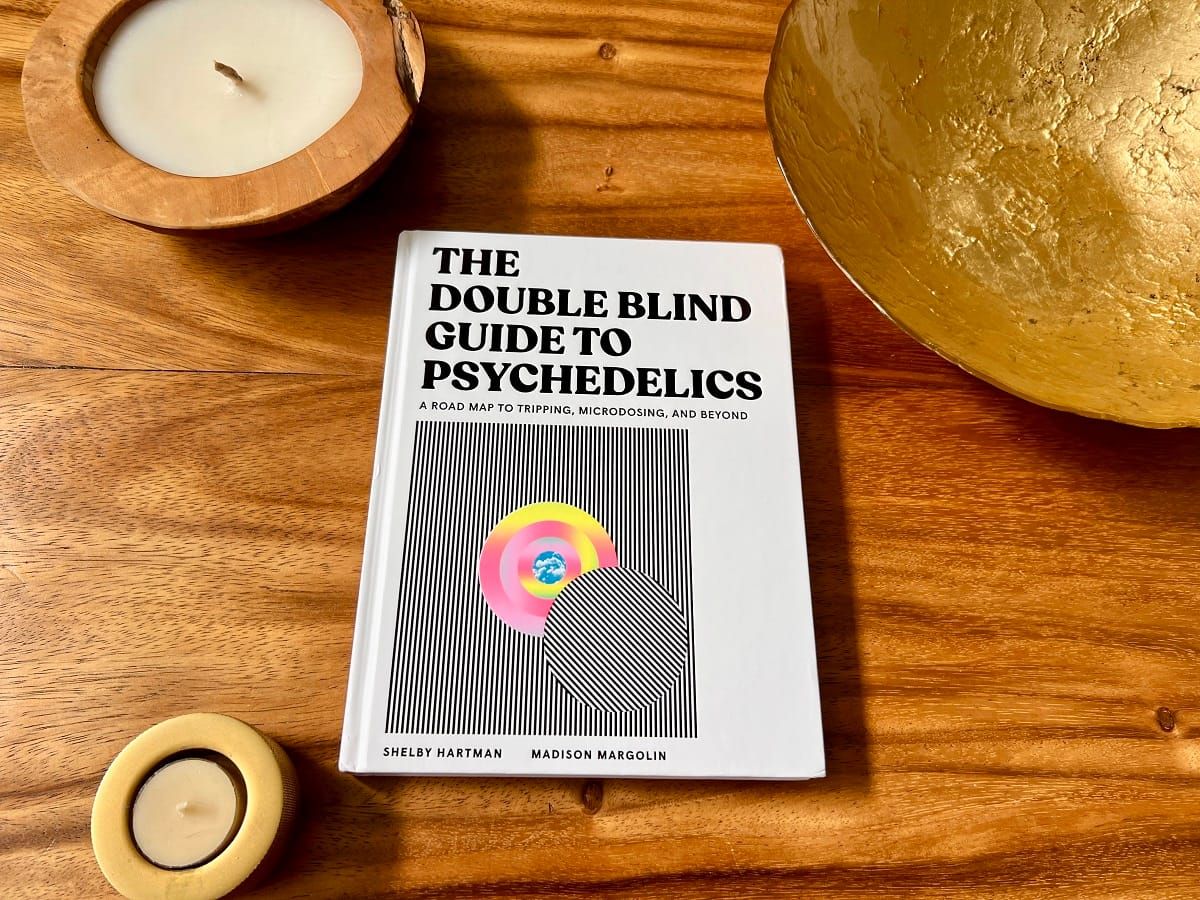
In my coverage of the evolving legalization of cannabis and psilocybin mushrooms in my home state of Oregon, I became acquainted with the journalists Shelby Hartman and Madison Rachel Margolin. In 2019, they founded DoubleBlind, a print magazine launched as a passion project that has since evolved into one of the most important media resources covering the burgeoning psychedelic movement. At the core of their reporting are some of the most important issues of our time: the depression epidemic, the corporatization of medicine, and the aching longing people feel for spirituality or some other collective sense of meaning—all presented in visually compelling, rigorous long-form features, poetry, art, and photo essays.
With their first book, The DoubleBlind Guide to Psychedelics: A Road Map to Tripping, Microdosing, and Beyond, they present the best of DoubleBlind’s work: inside scoops on the psychedelic movement and everything you need to know to embark on your own journey with plant medicines, wrapped into a beautifully-designed art object. While they acknowledge the contributions of largely white males who introduced psychedelics to Western spiritual seekers, they center the history of psychedelics correctly by documenting the centuries of indigenous wisdom connected to these substances.
I emailed a few questions to Hartman to help introduce their work to those interested in the history and modern use of psychedelics. Following is our conversation.
For those who are new to psychedelics, what's the difference between psychedelics and psychoactive substances?
Anything that alters how you feel is psychoactive: coffee, alcohol, even sugar. People define “psychedelic” differently, but, in DoubleBlind’s book, we define it using the etymology of the word “psyche” (mind) and “delos” (manifesting). This means any substance (including ketamine, cannabis, and MDMA, which operate differently in the brain than LSD and mushrooms) would be considered a psychedelic as it brings content that’s living within our unconscious to the fore to be processed.
Why are the words entheogen, medicine, and drug all valid ways to call psychedelics?
The word that’s being used depends on the person and how they perceive psychedelics. Entheogen means “generating the divine within.” It’s used by people who want to emphasize that psychedelics are pathways for connecting to the divine as they often occasion mystical experiences. Medicine is a term used by people to emphasize the healing and therapeutic properties of psychedelics, which have shown promise for treating depression, anxiety, and other mental health conditions. The word drug can be used in a variety of contexts: it can be used by physicians discussing FDA approval, people who believe psychedelics are harmful, or even people who want to validate recreational experiences with psychedelics as legitimate.
How do we shift the narrative brought about by the Nixon era war on drugs that labeled psychedelics a "white person's" drug? In particular, I'm looking for suggestions for how to avoid falling into the traps of cultural misappropriation.
Storytelling and education help shift this narrative immensely. For years, the majority of coverage on psychedelics talked about their affiliation with the hippie movement of the 60s and 70s and figures like Timothy Leary and Ram Dass. But in recent years, there’s been a big push in the psychedelic movement to center the stories of the Indigenous stewards of plant medicines. This includes magazines such as DoubleBlind including their stories as well as conferences bringing Indigenous leaders to conferences to share their perspectives.
How do you recommend those looking to explore the world of psychedelics use this book?
Read the intro and the first few chapters on preparation, navigation, and integration. Then, skip to the chapter on the drug that most interests you. Or just read it cover to cover!
What steps are needed to ensure one has a safe trip?
Psychedelics 101 is to think about “set and setting” before a journey. Your set is the mindset you’re in going into the experience and your setting is the environment in which you have the experience. This mostly involves being thoughtful and preparing. Take time ahead of the journey to really sit with yourself and get clear on what you’re looking to get out of it. Make sure you know where your medicine is coming from and that you have everything you need: someone that you trust and who is qualified to support you, a peaceful, beautiful environment, and people to lean on afterwards.
Do you have any thoughts on the growth of high priced luxury psychedelic retreats and the ensuring media coverage when such trips result in injury or death?
The number of injuries and fatalities from psychedelics are still low compared to the number of people who have had transformative experiences while journeying. The main psychedelic associated with fatalities is ibogaine so it’s important to be very careful about where you go for that experience. Legalization and decriminalization are important to support safety. At the same time, there will always be bad actors (as there are bad physicians and therapists) even if the entire industry is legal and regulated. So the most important thing is to do your research and take your time finding a vetted, trusted facility or space holder. We cover all of this in the book.
Learn more about Double Blind's work and order their book via their website.