

Don't look now, but Ukraine is winning
Ukrainian tenacity and ingenuity are slowly turning the tide on Russia's war.

[Previous: The fossil fuel era is ending in flames]
In February 2022, Russia launched an all-out, unprovoked war on its democratic neighbor Ukraine.
At the beginning of the invasion, Vladimir Putin believed he'd conquer Ukraine in just three days. Russian soldiers were so confident of meeting no resistance, they packed their dress uniforms for a triumphal march through the streets of Kyiv.
It wasn't just Russians who held this opinion. Many American conservatives counseled Ukraine to surrender because they argued that Russia was invincible, Ukraine had no hope of victory, and the sooner they capitulated, the easier it would go for them.
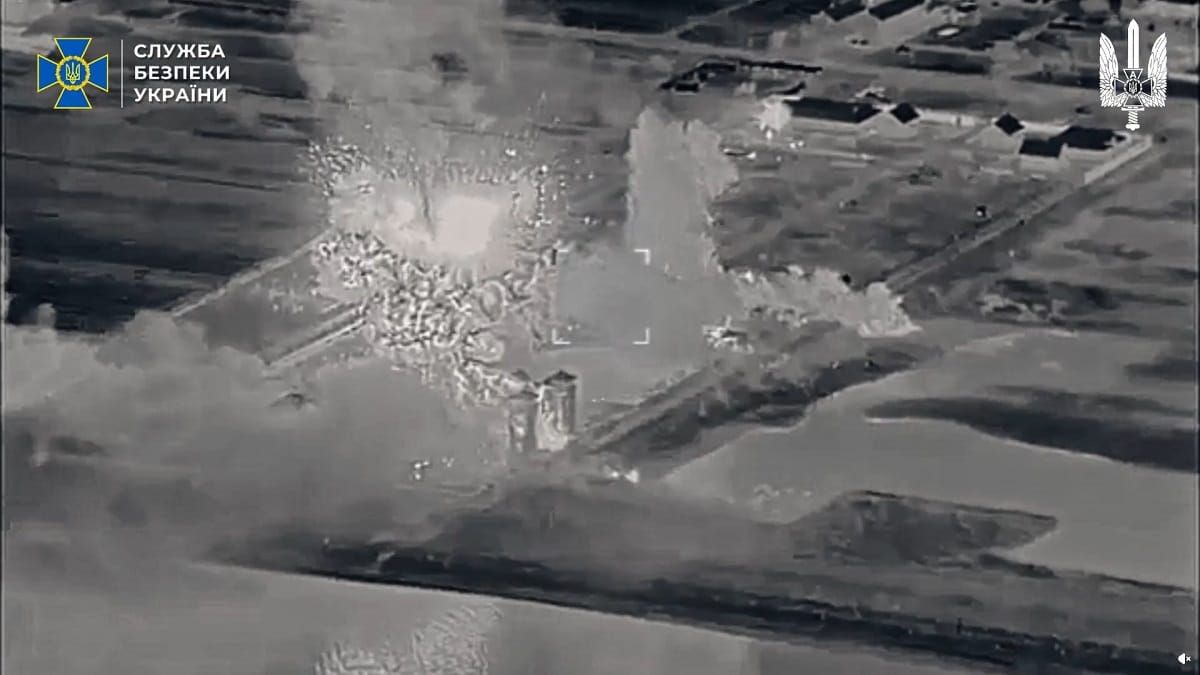
In May 2026, four years later, Russian refineries are going up in flames and Ukrainian attack drones are buzzing over Moscow.
How the tables have turned.
Drones over Moscow
May 9 in Russia is Victory Day, a holiday celebrating the Soviet defeat of Nazi Germany. It's traditionally celebrated with a lavish military parade through Red Square, showing off tanks, ICBMs and other heavy weaponry. It sums up the impression of strength that Putin wants to project to the world.
Because this parade holds so much symbolic value, we can use it as a benchmark to estimate how degraded Russia's capabilities have become after four years of war. By that standard, Russia has fallen very far indeed.
This year, the parade was greatly scaled down. There were just a small number of soldiers marching, and no tanks or other military hardware. For fear of Ukrainian drones, all mobile internet was turned off across Moscow for the duration.
In the days leading up to the parade, Putin was reduced to requesting a ceasefire so he could play with his toy soldiers without worrying about Ukrainian attacks. (In a bit of snarky humor, President Zelensky graciously announced that he would grant Russia a permit for the parade.)
Imagine the United States asking an adversary to hold off on bombing Washington, D.C. for one day so we could have a Fourth of July celebration!
The parade went off without a hitch, but Putin isn't going to be breathing easy. Just a few days later, Ukraine launched a massive wave of drone attacks against Moscow and its outlying regions. Ukrainian drones hit electronics plants, defense companies, and an oil terminal.
Beyond their military value, these strikes are a symbolic humiliation for Putin. Moscow is the imperial capitol of Russia and the seat of its leadership. It's supposed to be the best-defended city in the nation. And yet Ukraine was able to pierce those defenses, sending drones to attack strategic targets, and Russia wasn't able to stop it.
The attack on Moscow, as well as the now-daily sight of Russian oil refineries burning, are evidence that after four years of conflict, the tide is turning in Ukraine's favor. While Russia keeps sending soldiers to their deaths with little result, Ukraine is steadily rolling up the industrial capacity and fossil-fuel revenue that feeds Putin's war machine.
The evolution of drone warfare
In the first months of the war, Ukraine repulsed Russia's initial assaults but was still fighting for its survival. Russia captured territory in the easternmost provinces of Donetsk, Luhansk and Zaporizhzhia, as well as the regional capital of Kherson. The Russian army saturated Ukrainian lines with artillery and blitzed Kyiv and other cities with cruise missiles and air strikes.
But Ukraine fought back tenaciously, and with the help of Western military hardware, they held their own. Russian tanks were decimated by anti-tank missiles like the Javelin, while high-precision weapons like HIMARS allowed Ukraine to target and destroy Russian ammo dumps. Russia's flagship cruiser Moskva was sunk by a missile strike.
With neither side able to score a decisive victory, the conflict stagnated into World War 1-style trench warfare. However, Russia still had a heavy advantage in manpower, which they threw against Ukrainian defenses in human wave assaults. While they suffered awful casualties, they slowly inched forward.
Since the beginning of the war, Russia has incurred at least 1.2 million casualties, which includes both soldiers killed outright as well as those wounded too badly to return to the fight. This is a horrendous total, eclipsing every conflict since World War 2. But Putin has shown no reluctance to throw his people into the meat grinder, and so far, Russians have been fatalistically willing to obey.
As the war grinds on, both sides have increasingly turned to drones as their weapon of choice. Cheap, accurate and expendable, military drones are the weapons of the future. Russia copied Iran's Shahed suicide drones to bomb Ukrainian cities and civilians, while Ukrainian short-range FPV drones deliver disabling strikes on Russian tanks and drop grenades into Russian trenches.
Mid-range drones have an impact
Ukraine has been innovating at a furious pace, constantly churning out new types of drones. They've built ground assault robots to compensate for their manpower disadvantage, and interceptor drones that hunt and destroy Russian attacks in midair.
In the past few months, Ukraine has been rolling out a new, especially valuable species of attack drone: mid-range drones, which can strike targets from 15 up to 75 miles behind the front line. They fill the gap between short-range FPV drones and long-range attack drones.
READ: Wars of extreme convenience
Mid-range drones are ideally suited to striking Russian logistics and command posts. For example, they're now attacking targets in the occupied city of Mariupol—a significant feat because Mariupol commands the only overland supply route to the Crimean peninsula. With control over these roads, Ukraine could cut off supplies to occupying forces and put Crimea under siege.
Most importantly, mid-range drones are perfectly suited for destroying Russian air defenses, including critical systems like radars and missile launchers. Ukraine has been hunting these installations for months, and successful attacks like the drone blitz on Moscow show that this plan is bearing fruit.
Ukraine has scored hits inside Russia before—such as June 2025's Operation Spiderweb—but that required a complicated, large-scale covert operation to smuggle drones into Russian territory. That way, Ukraine could launch attacks from places Russia wasn't expecting and wasn't prepared to defend against.
That kind of spycraft is no longer necessary. Russia's air defense is stretched thin, unable to protect every critical site, so Ukraine's drone air force can strike where they please. And they have a target-rich environment to choose from.
A tottering colossus
Russia could end this war tomorrow by withdrawing from Ukrainian territory. But instead, they've slogged on, grimly persisting in their assault despite immense losses.
However, no nation can wage war forever, regardless of casualties or sanctions. Eventually, something has to give.
In a warning sign for Russia, companies like steel makers and manufacturers of drone parts are going bankrupt—the very businesses that should be making money hand over fist during wartime. Instead, the Russian state has outsourced the costs of war onto private industry. This can only go on for so long before complete economic collapse.
What will become of Russia if it hits that breaking point? Will Putin pull back at the last minute to head off popular anger? Will a cabal of plutocrats or disgruntled military try to seize power? Or will Russia split apart USSR-style, with breakaway republics declaring independence from Moscow? All these are very real possibilities. However it turns out, the naysayers and propagandists who predicted doom for Ukraine will be shamed in the end.