

The myth of blackness
American perceptions of racial identity are still influenced by the archaic "one-drop" rule.

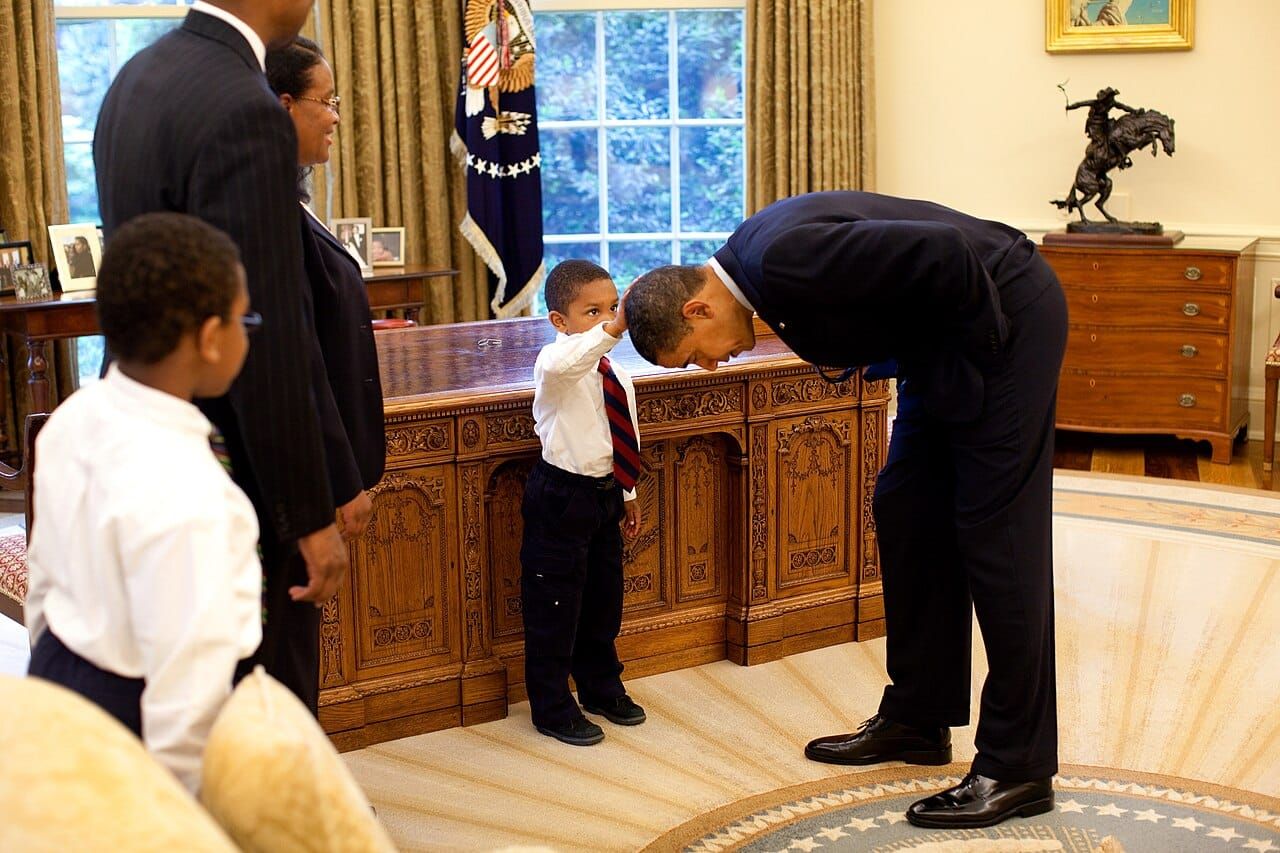

Is former U.S. President Barack Obama black?
What about Kamala Harris, the former U.S. Senator and 2024 Democratic presidential candidate?
We could ask the same question about many others, including singer-actress Zendaya, tennis phenom Naomi Osaka, superstar singer Mariah Carey, former Saturday Night Live comedian Maya Rudolph, actress Rashida Jones, former British royal Meghan Markle, rock star Lenny Kravitz, Academy Award-winning actress Halle Berry, film director Jordan Peele, rock group Guns & Roses guitarist Slash, actor and former pro wrestler Duane “The Rock” Johnson, and rock-guitarist legend Jimi Hendrix.
These are just a few well-known mixed-race Americans who are frequently characterized as “black,” effectively dismissing all of their other inherited ethnicities.
Why does blackness override other races?
Why is that, I wanted to know? For example, Barack Obama is mixed-race (father, black Kenyan; mother, white with English, German, Scotch-Irish, Welsh, and Swiss roots). He would seemingly have just as much right to identify as white. Yet this almost never happens. He's almost always characterized as America’s first African-American president.
A quick Google search, while admitting that Obama is “multiracial,” adds that “he is commonly identified as African American and is recognized as the first Black U.S. president.”
Wikipedia’s entry on Obama repeats the statement that “he was the first African American president,” as does the White House Historical Association bio, and even the official Barack Obama Presidential Library website.
Complicating this already fraught ethnic swirl, Obama himself has long self-identified as African-American.
An NBC News article in December 2008, President Obama’s first year in office, noted:
“Debate over whether to call this son of a white Kansan and a black Kenyan biracial, African-American, mixed-race, half-and-half, multiracial—or, in Obama’s own words, a ‘mutt’—has reached a crescendo since Obama’s election shattered assumptions about race.
“Obama has said, ‘I identify as African-American—that's how I'm treated and that's how I'm viewed. I'm proud of it.’ In other words, the world gave Obama no choice but to be black, and he was happy to oblige.”
Rebecca Walker, a writer who is of Russian, African, Irish, Scottish and Native American descent and said she used to identify herself as “human,” was quoted in the article opining that:
“Of course, Obama is black. And he's not black, too. He's white, and he's not white, too. Obama is whatever people project onto him... he's a lot of things, and neither of them necessarily exclude the other.”
But, still, news stories and sites like Wikipedia almost invariably refer to him as America’s first African-American president. Even while a mixed-race person may be “a lot of things,” the label of “black” seems to override everything else in the public eye.
The one-drop rule
The tendency is reminiscent of a similar mindset that existed in Nazi Germany, whose “racial laws identified a ‘Jew’ as anyone with three or more Jewish grandparents, regardless of their religious identity or practice. Conversions to Christianity were pronounced illegitimate going back two generations, formalizing and instituting Nazi racial theories,” according to UNESCO.
A 2007 Vanderbilt University Law School treatise—Crossing the Color Line: Racial Migration and the One-Drop Rule, 1600-1860, by Daniel J. Sharfstein—investigated the pernicious effect of arbitrary racial purity assumptions in American culture.
“Scholars describe the one-drop rule—the idea that any African ancestry makes a person black—as the American regime of race. While accounts of when the rule emerged vary widely, ranging from the 1660s to the 1920s, most legal scholars have assumed that once established, the rule created a bright line that people were bound to follow.”
So, many if not most Americans today think of Barack Obama as black, as he has consistently viewed and publicly identified himself. Indeed, on census forms in 2010 and earlier, he checked the box for black or African-American, not biracial.
Nonetheless, he is, in fact, only partly black. Of course, his race didn’t stop him from ascending to the U.S. presidency and leadership of the free world, or from carving out an esteemed career as one of America’s most effective, popular and admired political figures.
Yet, the enormous chasm of wealth and opportunity in the United States still separating whites and African-Americans (or citizens generally viewed as black by others) after the Civil Rights era loudly argues for less cavalierly narrow assumptions.
In a 2022 report, the National Community Reinvestment Coalition reported:
“The median Black household holds $44,100 in net worth compared to $284,310 for White households. This means Black households have roughly 15 cents for every one dollar in wealth that White households have. This gap has remained largely consistent over time.”
And Donald Trump is doing everything he can to further restrict programs to increase opportunities for our nation’s African American population by demonizing diversity, equity, and inclusion (DEI) initiatives as discriminatory against whites.
In the meantime, as we move gingerly toward the future, we should acknowledge the real ethnic kaleidoscope of America and stop assuming that “one drop” of blackness is a person’s whole story.
After all, we began in 1776 with a noble, all-inclusive motto for the Great Seal of the Republic: E pluribus unum (out of many, one). That was the official national motto until the Red Scare in the Communism- and atheism-fearful 1950s, when a Christian-crusader Congress inadvisedly changed it to the clearly unconstitutional “In God We Trust” and added “under God” to the pledge all American school children were required to daily recite.
As if we were and are fundamentally not a mixed nation, whose rainbow of people don’t embrace myriad beliefs that have nothing to do with Christianity or, sometimes, even God.
We weren’t and aren’t.