

The car-free, kid-friendly cities of the future
Walkable cities aren't just safer. They're friendlier and more human.
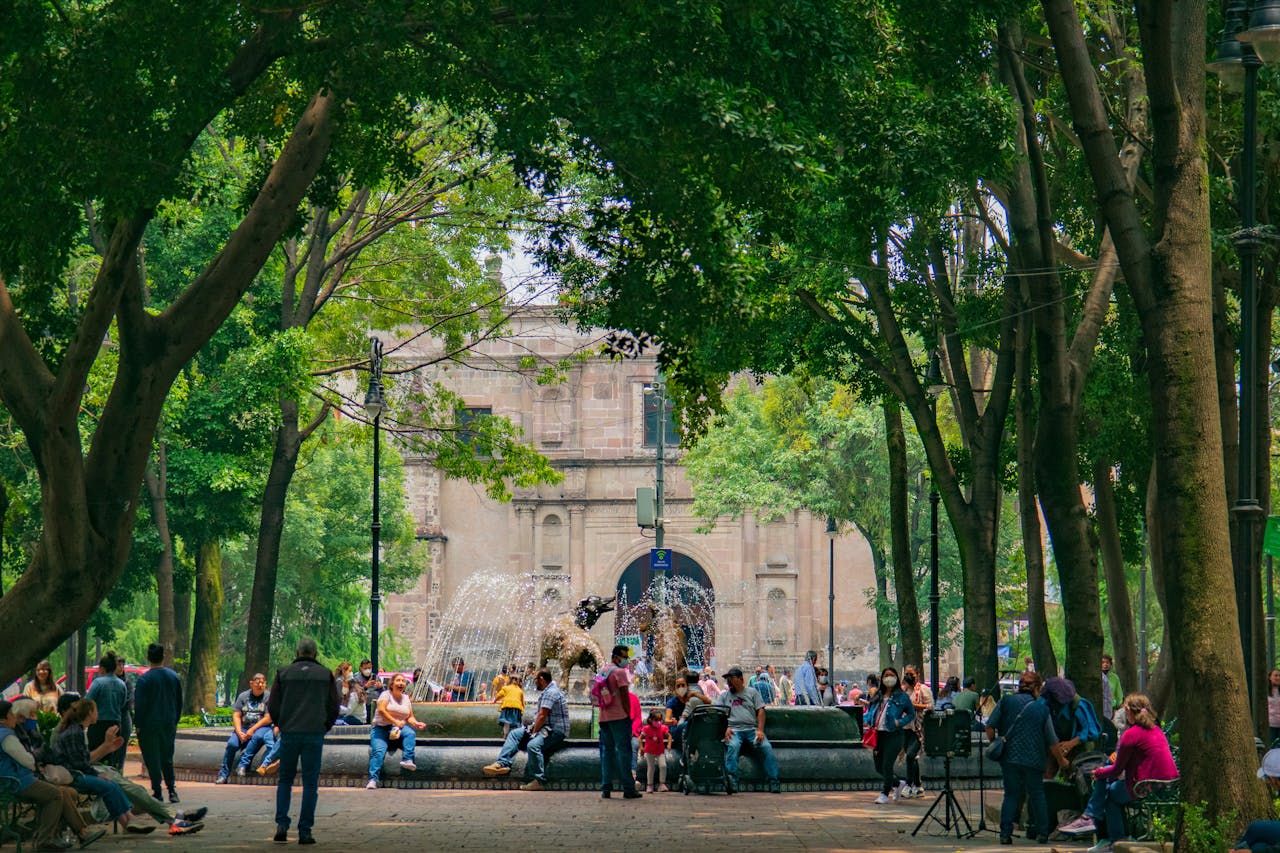
At age 11, following my parents’ divorce, my mother, brother, and I moved into a rented condo in a dense, walkable town in New York’s Hudson Valley. By the traditional standards of the American dream, we had fallen from grace. No longer homeowners, no longer holders of a green lawn and a private driveway, we were living in a euphemistically-described “affordable housing community” that one of the teachers in my new school more explicitly labeled “where all the bad kids live.”
But I’d never been more free. Suddenly, I could walk to my friends’ homes; to a movie theater; to and from my school, still miraculously located in the town’s historic core. I biked and walked around endlessly, leaving a post-it note on the kitchen table to let my mom know when I’d come home. I spent countless hours with friends, walking to fast food joints, to playgrounds, to their homes that were yelling distance from my own. Daily, I had the chance to move through the world with friends under my own agency and power.
Four years later, with my mom in a new relationship and our family earning two incomes once more, we moved back to a single-family house deep in exurbia, on an isolated road miles from the nearest sidewalk. While buying that house was in some ways a redemption moment for my family, the independence I’d enjoyed for years suddenly evaporated. Although I was grateful for the additional space and the better opportunities of my new school, I would lay in bed at night wracked with bottomless loneliness. I felt like a bird with clipped wings. Endless tension over requests to be driven to see friends—my desperation for human contact outside of school clashing with my mom’s exhaustion after working all day and commuting—would be a hallmark of the rest of my teen years. I moved to a small city for college and then back to New York City (where I’d lived part-time under the terms of my parents’ joint custody agreement) within weeks of graduation—choosing a future for myself that didn’t depend on a car.
Vision Zero: an ambitious, achievable goal
In 2014, New York City launched Vision Zero, an effort to reduce the number of deaths in the city from traffic violence down to, you guessed it, zero. It’s an achievable goal, one that more than 1,200 cities both near (Hoboken, New Jersey) and far (Espoo, Finland) and have set and met. But in New York, we’ve fallen far short. Tragically, since 2014 traffic violence has killed more than 120 New York City children; in 80% of deaths, the child was a pedestrian hit by a car.
And grim recitations of body counts alone don’t begin to explore the myriad abstract harms that cars cause to children: from non-fatal injuries, to asthma attacks, to reducing the diversity of their world by killing millions of animals per year, to driving climate change. Not to mention that parked cars take up so much public space on the streets—our streets, space that belongs to all of us—when our children don’t have enough safe places to run and play.
But even listing those harms still hides the true costs of car culture. For a country that prides itself on freedom, we excel at trapping our children. All around our country, because of a built environment that embraces sprawl and car supremacy, parents and kids are stuck in an inflexible dynamic: for kids to go anywhere, their parents have to drive them. Houses far flung from friends, school, and playgrounds mean that every outing requires parental facilitation. This throttles the ability of kids to explore their interests, create social ties, and generally interact with the world around them. It also contributes to parental stress. Parents spend all day working, then hours of evening and weekend time shuttling their kids around—if they have the money, energy, desire, and ability to do so. If the kids are lucky, their exhausted parents tote them around. Unlucky kids are stuck at home.
Kids over cars
Along with a few other parents, I started Kids Over Cars in 2024—a grassroots movement of parents and caregivers trying to reclaim New York City streets as safe, healthy, joyful places for the youngest New Yorkers. Nothing radicalizes you toward street safety work like the first time you attempt to cross a busy street with your stroller. New parental instincts heightened, you become acutely aware that the grim reaper lurks at every intersection. And you’re not wrong. In New York, traffic violence kills twice as many kids as guns. (Nationwide, guns recently surpassed cars as a leading cause of childhood death, but both still kill hundreds of kids each year.) Like other organizing projects in New York City that focus on parents and caregivers as organizers (like Climate Families NYC and NYC-DSA’s Comrades with Kids, from which Kids Over Cars sprang), we aim to give people who care an outlet to act on their frustrations with things that are keeping our kids from living full, healthy lives—in our case, that’s the dominance of cars and trucks on our local streets, and the dangers they pose—and give them opportunities for action.
Because of the urgency of the ongoing traffic violence crisis in our city, we parent-activists focus a lot on the “safe” part of our slogan. But our society loses sight of the bigger picture when we only focus on keeping kids alive around cars. Keeping kids alive, to state the obvious, should be the bare minimum.
Kids Over Cars has grander ambitions. We see a world where our kids can bike and walk to school not just safely, but joyfully. Where parents can say goodbye to them at the door, and kids—even small kids—can walk to school unsupervised, because they don’t need a guardian hovering over them to make sure they don’t get run over. Where on that walk, they can interact with nature and play with friends, because we replaced so much of the space we used to dedicate for car movement and storage to parks. Where our kids can walk, pedal, or scoot, and don’t need to compete for space on the sidewalk with one another to do so, because there is a protected bike lane connecting them wherever they need to go—and it’s big enough for both deliveristas and kids with training wheels!
We have a very long way to go toward this vision, even here in the heart of one of the most pedestrian-friendly cities in the United States. But we have to start somewhere. Parents in Kids Over Cars connect their efforts from around the city: for example, by sharing stories about how they made street near their kid’s school safer, coming together to rally for New York’s congestion pricing plan (and demand the elevators that the plan promises to fund), and connecting schools to the city’s Open Streets program.
I’ve written this essay from my rocking chair in my Bronx apartment, where I’ve been cradling my newborn. As I look down at her tiny toes, I swell with a desire to do more than keep her safe. I want to give her and her older sibling the sense of freedom, empowerment, and fun that I felt as a young teen in a safe, walkable place. I want to give her a city where our streets are filled with children’s laughter, not honking horns. Where kids can bike and walk to school with ease. Where we all breathe cleaner air. Where we have created streets that uplift our city’s future, not run it over.
Join Kids Over Cars if you’d like to make concrete changes for our streets for the littlest New Yorkers, and email us at KidsOverCars@gmail.com if you’re excited about getting involved.