
The future of free speech
We've survived censorship before, but that doesn't make the current moment less perilous.

It seems like freedom itself is in peril these days.
Of course, this fear is nothing new. For at least as long as the United States has existed, people from across the political spectrum have worried that freedom is endangered. Naturally, they’ve used this same slogan to highlight very different concerns; but most commonly, it relates to the fear that freedom of speech is under attack.
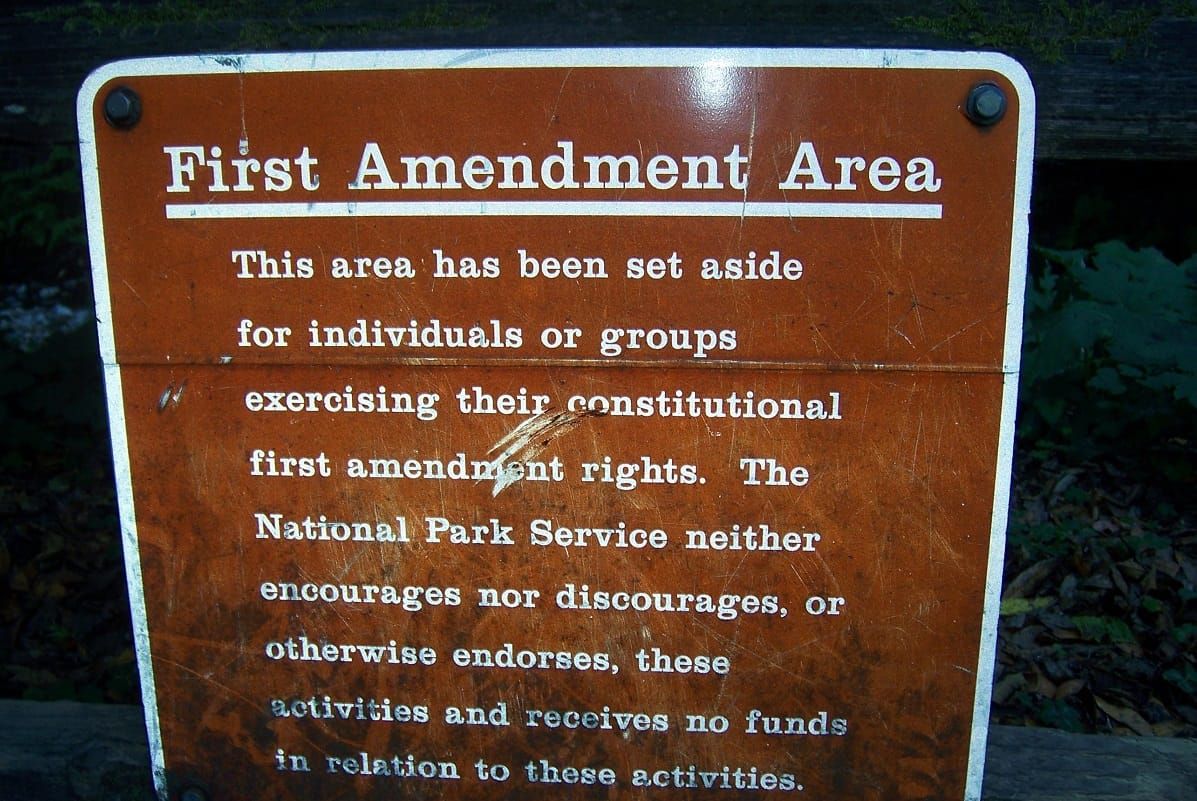
It’s true that freedom of expression is never absolute, even in the U.S., which has a more expansive version of this right than most other countries. It’s also true that some of the practices that have drawn the sharpest criticism—such as people being fired for saying or writing things deemed inflammatory or controversial, like expressing schadenfreude over the assassination of Charlie Kirk—are perfectly legal. They’re not government actions, so they’re not protected by the First Amendment. Still, that doesn’t make them right.
Taking over the public square
What’s particularly troublesome is when large corporations accumulate so much power, they come to rival governments in their ability to determine what ideas we can and can’t express. When the public square is owned by private companies, we only have as much free speech as they’re willing to grant us. For instance, social media companies can put a thumb on the scale, boosting some opinions to prominence and suppressing others, in a way that’s almost impossible for the average user to detect.
Traditional media companies have done the same thing more explicitly, as with Jeff Bezos’ 2025 statement that the Washington Post opinion page will, from now on, only publish editorials in support of “personal liberties and free markets”.
What would be the solution?
I recall reading an essay which described two controversial writers whose books were dropped by their publisher as martyrs to free speech. Even if that’s true, what can or should be done? Oblige publishing companies to keep printing books they originally released, no matter what? Should we bring back the “fairness doctrine” and require social media companies to alter their algorithms to give equal prominence to every opinion? Where does it end?
Despite the obvious corruptions and abuses that can occur in the private sphere, there are too many issues to extend constitutional protections to the decisions of non-state actors. Surely, private publishers—like this very website—have a right to decide which opinions they want to promote and which opinions they reject. To take that away from them would be violating their rights of free speech and freedom of association.
Whatever the merits of these complaints, the case is clearer when the government forces private entities, either explicitly or implicitly, to carry out its wishes for censorship. The Comics Code is one well-known example from the twentieth century, as is the Hollywood blacklist. In both cases, these private-party censorship initiatives arose from moral panics sparked by congressional hearings, and both were created to stave off direct government intervention. In other words, they were proxies for state censorship.
We've been here before
That brings us to the current situation, where President Trump and his administration are openly trying to silence their critics. In some cases, it’s by state action, such as seeking to deport non-citizens who’ve been critical of their foreign policy or their anti-immigrant secret police. In other cases, where U.S. citizens are involved, government officials have pressured employers to fire people who’ve spoken out against them.
Whether or not you treat this fact as consolation, this isn’t the first time something like this has happened in the United States. I mentioned the Hollywood blacklist and other examples of censorship that arose from the Red Scare, but there are earlier examples as well. Fewer people are familiar with the Espionage Act and the Sedition Act, both of which were passed during World War I.
These laws criminalized speech and writing that criticized government conduct during the war. Thousands of people were prosecuted for violating them, including labor leaders, journalists, whistleblowers, politicians and activists. Most of the ideas they were punished for expressing would now be treated as protected expression, but at the time the U.S. Supreme Court ruled otherwise.
Even with current jurisprudence, it seems unlikely that laws this repressive are going to make a comeback. However, we shouldn’t let this make us complacent. Just because worse abuses have happened in the past, it doesn’t mean we shouldn’t be opposed to what’s going on right now. We can’t assume these repressive tactics and ideologies are just a phase and will eventually go away on their own. They might become the new normal.
READ: Do not despair
On the other hand, it’s still possible that things could get worse. Assuming a compliant Supreme Court (especially since several of the current justices were appointed by Trump) and a conservative Congress, laws which previously wouldn’t have passed constitutional muster could be enacted and upheld.
Furthermore, Trump could simply ignore other laws that he's found inconvenient. One nightmare scenario would entail him encouraging people to commit political violence on his behalf, intimidating critics into silence, and then pardoning his henchmen for any crimes they’re found guilty of—or just ordering his attorneys not to prosecute them. There’s no doubt that he’d find willing volunteers. The past few years have made it obvious that a large percentage of people on the American right don’t really care that much about freedom of expression, however often they claimed to. They only believe that human rights are for them, not for others they disagree with.
I don’t have much doubt at this point that Trump would gladly become an outright dictator if he had the chance. Some people would argue we’re already heading in that direction, or that we’re there already. Other nations have seen a similar turn away from democracy and towards authoritarianism, such as Viktor Orban in Hungary. We can’t assume the U.S. is exempt from this pattern.
So what’s next? I hope our current situation won’t get worse—that the pendulum has swung as far as it can in one direction, and is about to swing back. But there’s no guarantee of that. We only got to this dire point because too many people were complacent: ignoring the evidence of Trump’s dictatorial leanings, dismissing his violent threats as mere political rhetoric, telling ourselves “It can’t happen here” (or “It can’t happen here again” if you know our less stellar, more forgotten history).
Whether or not the tide is about to turn, our politics will only change if enough people put work into changing them. We all have a duty to offer as much resistance as possible to political repression, whether it’s done in the guise of legality, through gray-area methods, or through outright illegal tactics.
We especially have to pay attention to slippery-slope tactics that are employed as workarounds for laws that would prohibit the same actions from being carried out legally. If people choose not to speak up because they’re worried about the consequences, the authoritarians have already won. Legal precedents matter, but unwritten social precedents are equally important. I admit, like many others, I’ve been too lax in watching out for these. Now we’re paying the price.
