
One terawatt per year
We're making more progress on green energy than most people realize.

[Previous: The fossil fuel era is ending in flames]
The colossally foolish Iran war is wasting American blood and treasure for no gain. It's terrorizing and killing innocent people, while making Iran's ruling mullahs even more determined to cling to power and get revenge. It's caused fuel and fertilizer prices to skyrocket, creating deep misery around the world for tens of millions. It's a grudge match with no foreseeable end.
That's the bad news. Is there any silver lining at all in this looming dark cloud?
If there's anything to take solace in, it's this: the Iran war may turn out to be the death knell of fossil fuels. Like the Russia-Ukraine war, but on an even greater scale, it could supercharge the green transition to renewable energy.
Solar panels and EVs boom
When gasoline is cheap, consumers flock to buy huge, wasteful trucks and SUVs. But Iran's closure of the Strait of Hormuz has caused prices to spike. As the price of gas climbs, more and more people are starting to see these fuel-guzzling vehicles as a painful financial burden.
According to surveys, $4 a gallon is the threshold at which a majority of Americans start cutting back on driving or looking at more fuel-efficient vehicles. The data bears that out: since the war started, there's been a sharp upsurge of interest in EVs.
Gas-burning cars will always be at the mercy of the global oil market. Prices swing dramatically and unpredictably. A war half a world away brings instant pain in the pocketbook.
Meanwhile, electric vehicles are cheaper to recharge. They're powered by the cheapest electricity in history, and they get the equivalent of 100 to 140 miles per gallon. Perhaps even more important, they're dependably cheaper, especially if they're powered by electricity generated by local renewables. No dictatorial regime or warmongering theocracy can shut off the sun or the wind.
However, the Iran war isn't just changing people's driving habits; it's changing all the ways they buy energy. The U.K.'s largest domestic energy supplier has reported a massive 50% jump in solar panel sales since the war started. Sales of heat pumps and electric vehicle chargers are also spiking.
In the U.S., as well, consumers are looking for ways to reduce their energy bills. One novel approach that's gaining momentum is so-called plug-in or balcony solar. This consists of a cheap, portable system of solar panels that don't need an expensive roof installation. You can put them in a sunny window, on a porch, or hang them from a balcony. Connecting them is as simple as plugging them into a regular outlet. They feed power into your house's electrical system, reducing the amount you have to buy.
These kinds of systems are already common in Europe, and the U.S. is joining the pack. So far, Utah and Virginia have legalized plug-in solar, and a slew of other states are poised to follow suit.
But are these strictly small-scale changes? Or can they add up to something that moves the needle on a global scale?
Thinking in terawatts
As I've previously written, human civilization consumes about 186,000 terawatt-hours of energy per year. That equates to a continuous production capacity of 21 terawatts, or 21,000 gigawatts. Bear in mind, that's not just electricity; it's all energy use, which also includes heating, transportation and shipping, and industrial manufacturing of substances like steel and cement.
While renewable energy is a fraction of that, its share is climbing rapidly. In 2023, the world added 507 gigawatts of renewable capacity.
In 2024, it was 660 gigawatts.
And in 2025, according to a report by energy think tank Ember, the world added a record-shattering 814 gigawatts of new solar and wind energy. This brings the total global capacity of renewables to just over 4 terawatts. According to Science magazine, renewables surpassed coal as a source of electricity generation in 2025.
These are hopeful numbers, but we can do better. And in the very near future, we will.
As I've previously reported, China is one of the few countries—arguably the only country—that's treating the threat of climate change as seriously as it deserves. China is engaged in a massive buildout of renewable energy, to the point that its solar and wind farms now generate as much power as the entire United States consumes.
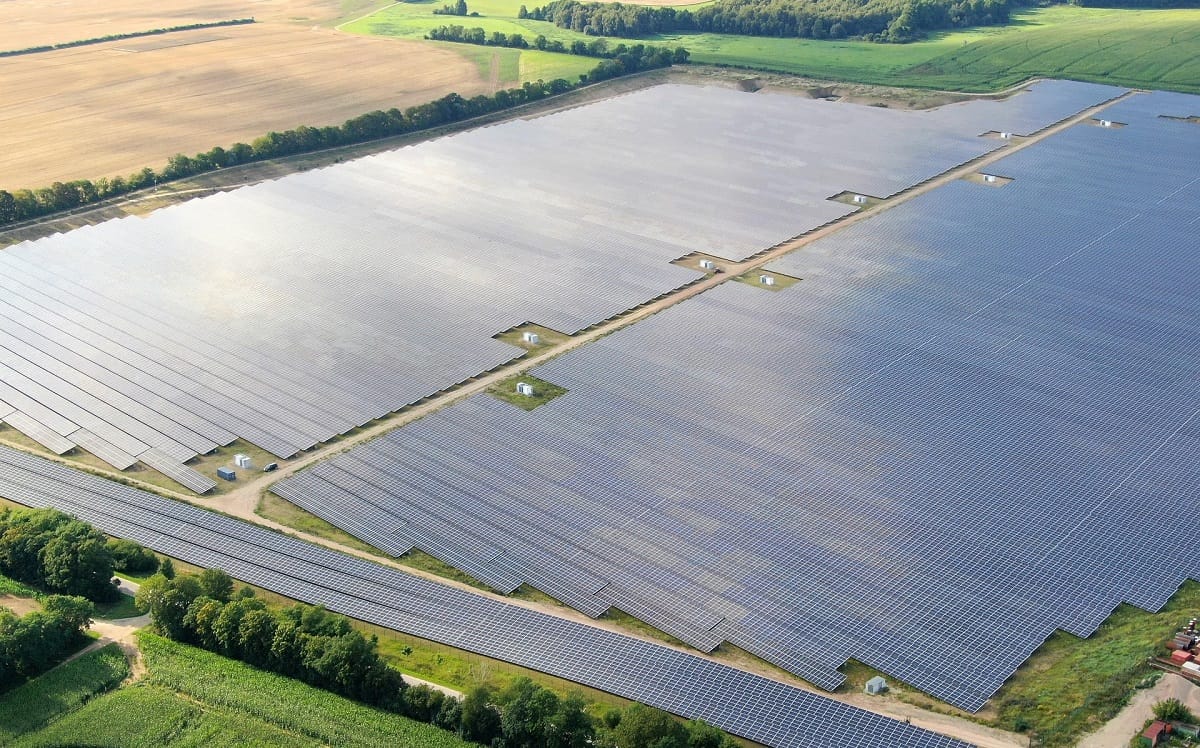
And their industry is still making strides. Chinese factories can now crank out one terawatt's worth of solar panels each year, as much as a thousand nuclear plants.
Combined with wind energy, the world could absolutely be deploying more than one terawatt of renewable energy per year—and in all likelihood, very soon will be. The constraints aren't technological, but legal, financial and logistic: raising the capital to pay for it, finding the workers to install it, and navigating the hurdles of connecting it to the grid.
While climate change is an enormous and pressing crisis, we shouldn't surrender to despair. On a historical timescale, we're quickly adapting.
The first practical silicon solar cell was demonstrated in 1954. If you start counting from that point, it took almost seventy years to reach the milestone of one terawatt of solar energy deployed worldwide. It took just two more years to double that. And the pace is only accelerating.
The better news is that we don't even need to replace all the energy we're currently using. If we electrified every industry it's possible to electrify, we'd use less energy overall, because fossil fuels are inherently wasteful. Most of the fuel burned by an internal combustion engine is lost as heat.
This is a "better late than never" situation. Although humanity is lagging behind where we should have been by now, we're finally making progress in fighting the climate crisis. A future is in sight where we dispense with fossil fuels entirely. (Some industries, like aviation, will be tougher to crack—but there are options here too as well, like using renewable energy to electrolyze water and make hydrogen fuel.)
If we keep up this pace, we could electrify the world within twenty years. We could reduce planet-warming carbon emissions nearly to zero. It sounds too good to be true, but it's not fantasy. It's the future we'll be living in sooner than you think.
