

Hungary says "Igen!" to democracy
People power defeats an illiberal autocrat.

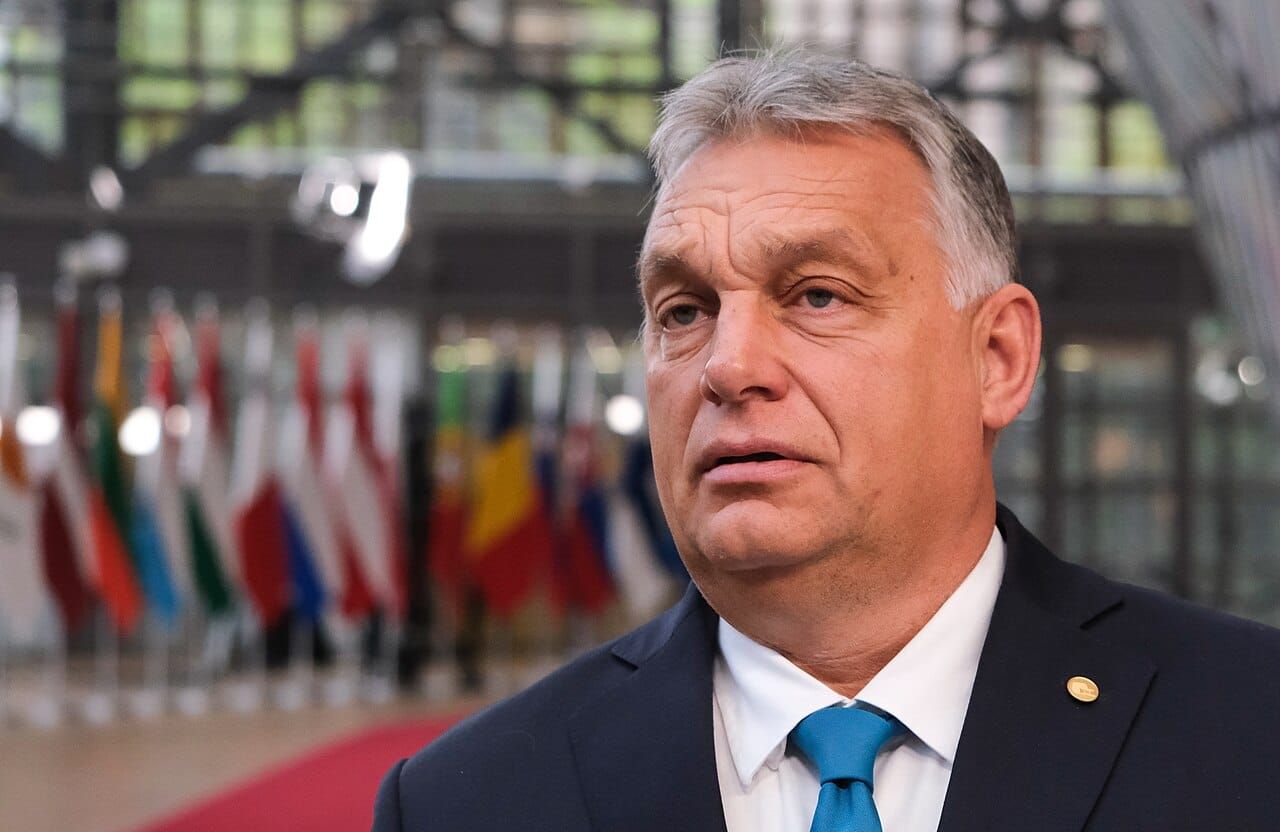
Great news from Hungary: Viktor Orbán, Europe's preeminent autocrat, has been ousted.
This month, Hungary held parliamentary elections. The outcome was a stunning defeat for Prime Minister Viktor Orbán and a landslide for the opposition party, Tisza. Tisza and its leader, Peter Magyar, not only won—they won by enough to secure a two-thirds supermajority. It was a total repudiation of Orbán; his right-wing party, Fidesz; and their project of dismantling Hungary's democracy.
The Hungarian people have spoken clearly about their wishes for the future. They want freedom and an end to corruption; they want to renew their ties with the rest of Europe; and they want to put a stop to Hungary's democratic backsliding.
A European outpost of autocracy
For the last sixteen years, Orbán held near-absolute power in Hungary. He struck a pose as a defender of Christianity and traditional values, claiming he would protect the West from scary threats like Muslim refugees and LGBTQ+ people.
His party, Fidesz, advocates hard-right, Christian nationalist politics. Its agenda includes banning same-sex marriage and adoption by gay couples; banning pride parades; prohibiting people from legally changing their gender; rolling back anti-discrimination laws; and opposing multiculturalism and blocking immigration, with the goal of making the country racially and culturally homogeneous. (For example, Orbán has said, "We do not want to be a diverse country").
They're also a thorn in the side of the European Union. Orbán and the EU repeatedly clashed over rule-of-law and human rights issues. In particular, Orbán acted as a foot soldier of Vladimir Putin, and hampered pan-European efforts to fund and arm Ukraine against Russian aggression.
Fidesz came to power in Hungary's 2010 election. Immediately after winning, they forced through a set of constitutional rewrites to cement their grip on power. Among other things, they gerrymandered electoral maps and lowered the retirement age for judges, forcing out incumbents so they could pack the courts with loyalists who'd rubber-stamp their laws.
Orbán's next step was gaining control of the media. Loyalists took over the media regulatory agency, using its power to punish opposition outlets and block their broadcast licenses. Meanwhile, the government spent lavishly to buy advertising on friendly outlets, making them profitable while starving the opposition of revenue. Orbán rolled out the red carpet for his allies to buy and consolidate newspapers, television and radio stations, purging independent journalists and replacing them with mouthpieces for government propaganda.
They filled state universities with regime-friendly chancellors who controlled budgets and hiring to quash dissent. They packed prosecutors' offices with loyalists who'd overlook corruption and kickbacks by their allies. They targeted NGOs that opposed the government with police raids and other legal harassment.
READ: Democracies fall. So do dictatorships.
This takeover happened largely without violence. There were no opposition leaders or journalists being sent to gulags or murdered with impunity, such as happens in places like Russia. Instead, Orbán schemed to slant the political landscape more and more in his favor, granting advantages to himself and his allies while making it increasingly difficult for the opposition to speak out or organize.
None of this happened in secret. Orbán was open about it, describing his ideology as "illiberal democracy":
And so in this sense the new state that we are constructing in Hungary is an illiberal state, a non-liberal state.
This kind of politics is also called soft authoritarianism or electoral autocracy. It's democratic on paper, but doesn't tolerate alternative views and doesn't protect its people's rights. It reduces all political issues to loyalty, taking over the public square and coercing institutions to serve the desires of the rulers. Elections are technically free, but nowhere close to fair.
Conservatives' Disneyland
You might say that this sounds like what the Republican party wants to do in America, and you'd be right. In many respects, Hungary pioneered the anti-democratic politics that's been embraced by the right wing in the U.S. and around the world. American conservatives saw what Orbán was doing and loved him for it.
For years, conservative pundits like Tucker Carlson have given positive coverage and sycophantic interviews to Orbán. Carlson went so far as to temporarily host his show from Budapest:
"If you care about Western civilization and democracy and families and the ferocious assault on all three of those things by the leaders of our global institutions, you should know what is happening here right now," Carlson said on the show.
CPAC, the who's who of the right wing, has taken place in Hungary for several years running:
At a conference center plastered with slogans like "Let's drain the swamp," Republican after Republican endorsed harsh immigration policies, crackdowns on LGBTQ rights, and a battle against "woke ideology."
The scene could have been any recent GOP event—except it was taking place roughly 4,000 miles away from the US at the Conservative Political Action Conference's third annual gathering in Hungary.
And of course, Donald Trump loves Orbán just as he loves dictators everywhere:
In public speeches, Trump has called Orbán "fantastic," "respected" and said "nobody is a better leader" than the Hungarian prime minister.
The downfall of Orbán
Orbán's work to rig the system bore fruit. In the elections of 2014, 2018 and 2022, Fidesz retained its huge parliamentary majorities.
But 2026 was different. For one thing, there was a rash of scandals that even a tame media couldn't cover up:
To make matters worse for Orbán, a sequence of scandals shook Hungary ahead of the vote. In December, leaked video footage revealed severe cases of child abuse in state-run children's homes. In February, the public learned how the government enabled Samsung to expose workers to toxic chemicals in a battery plant. Some workers were allegedly asked to take rotating shifts within the most contaminated zones, a practice reminiscent of repair works in the Chornobyl exclusion zone. In March, a detective from the National Bureau of Investigation revealed a plot by the country's secret service to infiltrate and cripple Magyar's Tisza Party using intimidation, blackmail, and bribes.
Hungarian voters were also angry about high inflation and stagnant wages. This is a global problem, but it's also the predictable consequence of corruption and cronyism. In an autocracy, elites favored by the ruler can loot the state to accumulate huge wealth, while everyone else is left out in the cold. After sixteen continuous years of this, the Hungarian people were growing fed up.
When polls showed Orbán was heading for a loss, his right-wing allies tried to intervene and put their thumb on the scale. In an especially shocking spectacle, J.D. Vance went to Hungary on the eve of the election to campaign for Orbán—a brazenly unethical and wildly inappropriate instance of a sitting presidential administration trying to meddle in another country's politics.
But none of it helped. The 2026 election saw record-breaking turnout. If the election had been close, Orbán doubtless would have tried to contest or steal it—but it wasn't close. Right-wingers all across the world, from Donald Trump to Vladimir Putin, must be crying bitter tears this week.
The lesson from Hungary is that democracy works—when the people want it to. Voting isn't pointless. On the contrary, it's a powerful tool for change and an effective weapon for defeating fascists, tyrants, and autocrats of all stripes.
This is an antidote to the corrosive message of cynicism spread by right-wing autocrats and their allies. They want you to be apathetic, disengaged and pessimistic. They want you to believe that everything is unfair and the system is hopelessly rigged. They want you to believe your participation will never matter, so there's no point in trying. That way, they don't have to answer to scrutiny or face serious opposition.
But these are lies. Even in a rigged system, the will of the people can prevail.
It's not just Hungary that proves this. The Economist's Democracy Index reports that democracy made modest gains around the world in 2025, after years of backsliding and erosion.
As good as this news feels, we shouldn't be prematurely optimistic. It's too soon to conclude that we've reached a turning point, or that voters around the world are fed up and authoritarianism is on its way out. But if a democratic revival is about to take place, this could be how it starts.