
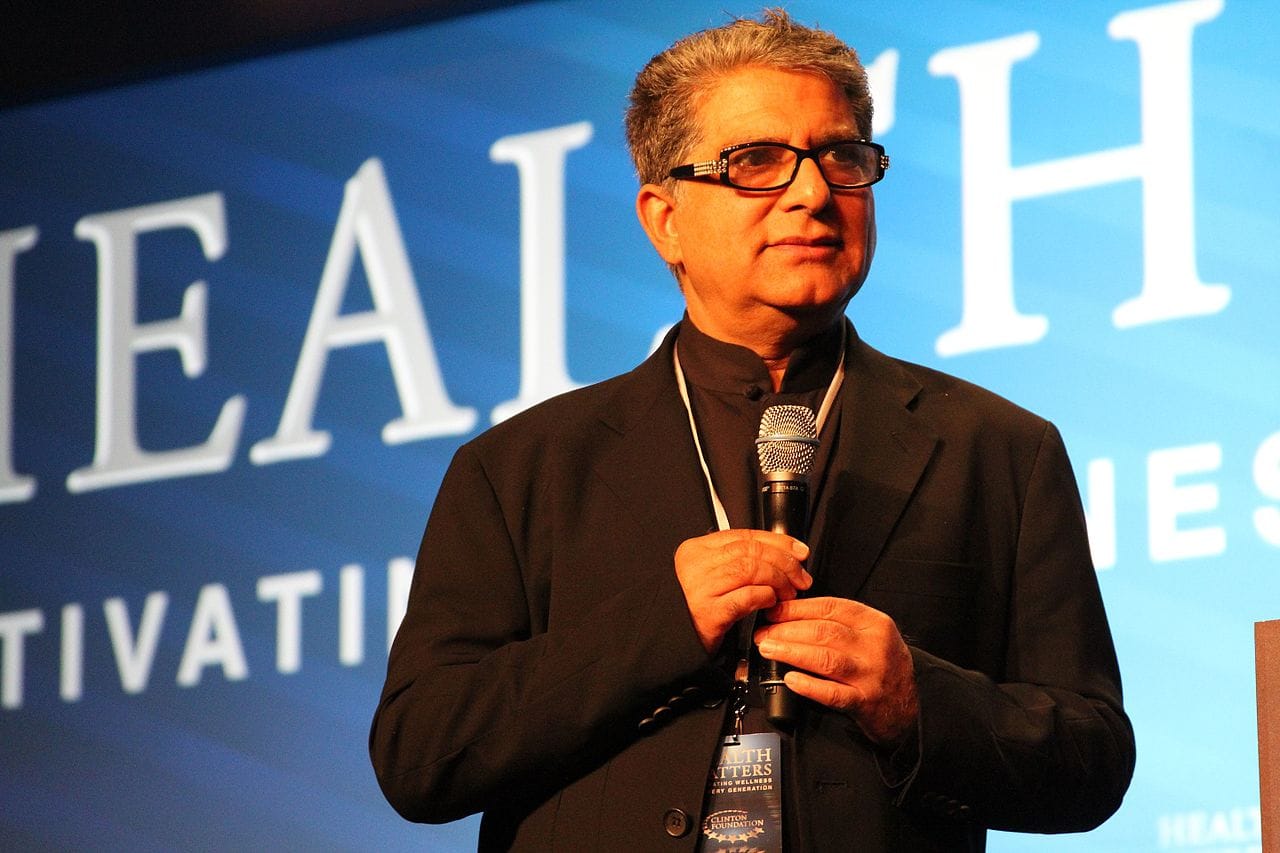

Chopra and Epstein: Breaking the cycle of guru dependency
A famous "spiritual" guru bantering with a notorious sex criminal should be a lesson to all seekers.

The revelation of a close bond between the late Jeffrey Epstein and Deepak Chopra, dating from 2016 to 2019, has sent shockwaves through the spirituality and wellness industry. How could the man responsible for introducing Eastern consciousness and Ayurvedic medicine to Western spiritual seekers engage in a friendly relationship with a convicted pedophile?
In public, Chopra has cultivated an image as a wise, benevolent spiritual figure. Behind the curtain, Chopra's private exchanges with Epstein are the farthest thing imaginable from this persona. In the messages they exchanged, they sound like frat dudebros swapping callously sexist and demeaning remarks, such as "God is a construct. Cute girls are real". They reminisce fondly about wild parties and swap stories of sexual conquest, with Chopra writing to Epstein on one occasion: "I liked watching you zero in on your prey... made me smile". When a girl dropped a civil case against Epstein alleging that he sexually abused her when she was thirteen, Chopra wrote: "Good".
Even more disturbingly, on multiple occasions, Chopra encouraged Epstein to bring his "girls" on trips they'd be attending together. When Epstein reciprocated by asking Chopra to "find [him] a cute israeli blonde", Chopra eagerly responded: "I can".
On his Substack, Dr. Scott Mills describes the true depth of Chopra's connections with Epstein:
Epstein didn’t just confide in Chopra and sign off with “Love.” He moved money for him. He brokered deals. He opened doors to some of the wealthiest and most powerful people on earth — and Chopra walked through every one of them.
As expected, Chopra took to X to deny his participation in any criminal or exploitative conduct. The most he admits to is "poor judgment" for the sexist tone of his email exchanges with Epstein. He adds that his "focus remains on supporting accountability, prevention, and efforts that protect and support survivors." However, a review of his current projects does not mention any initiatives that are not connected to one of Chopra's 95+ books.
While Chopra has attempted to brush the scandal off, the University of California San Diego took a more direct approach, telling CNN that Chopra's association with Epstein was "regrettable" and that his affiliation with the school will end at the end of June. Despite this announcement, as Dr. Mills pointed out, to date the biggest names in the spirituality and wellness industry—with over 250 million followers combined—have yet to speak out. That said, whistleblowers are starting to emerge, such as Dr. Lisa Rankin, who details myriad abuses she witnessed while sharing the stage with Chopra & company.
Unpacking the Chopra charisma
According to Lisa Braun Dubbels—who promoted Oprah-endorsed Brazilian faith healer João de Deus (“John of God”) before he was exposed as a serial predator, and later repented for her own complicity—charismatic self-proclaimed gurus like Chopra don’t arise out of nowhere: "They come out of a system built to reward charisma, mystique, and spiritual ambiguity far more than responsibility or ethics."
In her estimation, Chopra didn’t suddenly reveal a hidden shadow. "He simply illuminated the architecture that built him: a marketplace that elevates charisma, protects personalities, and suspends scrutiny the moment someone presents as 'enlightened.'"
Over the years, she's noticed how the figures that rise up as international best-selling authors are those who project authority, emotional resonance, and market-ready mystique—not the ones who demonstrate grounded ethics or disciplined spiritual training. Should a guru get caught with their pants down figuratively, or sometimes literally, they will quickly be shown the stage door, with their replacement waiting in the wings. After all, the spiritual shlock show must go on.
Reclaiming our own journey
On her Substack, scholar Liz Bucar explains the appeal of Eastern gurus like Chopra to Westerners seeking wisdom and spirituality: "We want spiritual depth without material sacrifice. We want ancient wisdom without cultural context. We want transformation without discomfort. We want to feel enlightened without actually changing our lives."
In a Substack post titled "When Gurus Fall," Rachel Cannard opines how it is easy to direct that question outward by focusing on the latest and greatest scandal impacting the spirituality and wellness industry. She states that it is harder, and more necessary, to turn our focus inward. Here are some questions she proposes we ask ourselves when abuses come to light pertaining to a thought leader whose work we admired:
What systems have we participated in?
What hierarchies have we quietly endorsed?
What red flags did we paint white because the teachings were useful?
Dr. Rankin reminds us that for spiritual seekers, the real work was never supposed to be about the gurus. "It has always been about awakening our own discernment, our own inner authority, our own capacity to sense what is clean and what is exploitative, what is loving and what is harmful—regardless of who is delivering the message from the stage."
This falling apart could also be a falling open, that Dr. Rankin describes as "an opening toward a field that is more trauma-informed, more ethically boundaried, more justice-aligned, and more psychologically awake." In this spirit, she feels that reform and healing will not come from those marketed as thought leaders, who are inevitably more focused on building up their brands than helping people. Instead, she believes that true change "will come from those of us willing to remain awake within it—willing to stay, to speak, to listen, and to protect what is sacred, even when protecting it costs us."
While Anke Richter, New Zealand author of Cult Trip and Decult director, appreciates that many people have benefited from neo-tantra, meditation, or so-called sexual shamanism, she now believes that less is more:
“Instead of flying around the world from one training to another, handing over your money and eventually your freedom of mind to a suspect school or a spiritual influencer with grandiose promises of transformation and enlightenment, how about evolving by becoming a conscious consumer? Let’s not feed the gravy train of workshop tourism and the exploitative business enterprises of entitled, narcissistic, abusive gurus. Everything that those self-proclaimed healers promise can be experienced without monetization or celebrity culture.”
As we head into Spring 2026, I propose a little social experiment. From now until the Summer Solstice, see what happens when you stop following the hottest spiritual superstar on social media. Instead, try tuning in to grassroots ventures happening in your own community. Along the same lines, instead of trying to mold yourself so you can be part of the "cool kids" crowd, see how your body responds when you make actual connections with teachers who can express empathy and compassion. Your soul and sanity will thank you.
