

Beyond Mysticism: Authenticity in an AI-generated world
Can AI create art that expresses the spiritual impulse, or is that solely the domain of humans?

While I've become intimately connected to the craft culture of the Pacific via the region's brewpubs and tasting rooms, which have fulfilled the community connections I once experienced through church, I confess to lacking a similar familiarity with Puget Sound's artistic community. When I attend regional press events with an artistic bent, I tend to function more as a professional journalist reporting on the facts of this particular event than as a spiritual seeker engaging with the art on display as a spiritual experience.
But when I received an invite to the Seattle Art Museum's exhibit, Beyond Mysticism: The Modern Northwest (March 5—August 2, 2026), the notes attached to the media invite suggested I might be in for a more immersive experience where I could explore my spiritual sensibilities:
Inspired by the region’s natural beauty and rapidly changing city, this exhibition showcases artists who told the raw story of Seattle in the 20th century. By sharing the Pacific Northwest’s perspective through trending art styles—including Social Realism, Surrealism, and Abstract Expressionism—these artists offered a unique take on Modernist art. They challenged the “mystic” label ascribed to their works.
Could this exhibit allow me—for my admittedly weary and war-worn spirit—to not only educate myself about Puget Sound's artistic history, but also to soak in with all my senses these artistic depictions of 20th-century life? Curious to find this answer, I replied "yes" to attending the press preview.
Art beyond the bounds of logic
After a few cursory introductions, the curators walked us through this exhibition consisting of over 150 paintings, drawings, photographs, and sculptures, divided into four focus areas: industrialization, ecocriticism, Surrealism, and Abstract Expressionism. Throughout the tour, they expounded on how artists from different disciplines and time periods interpreted this region's march toward modernity. The inclusion of works by internationally known artists such as Georgia O’Keeffe and Salvador Dali enabled us to place these regional works within the larger modernist landscape.
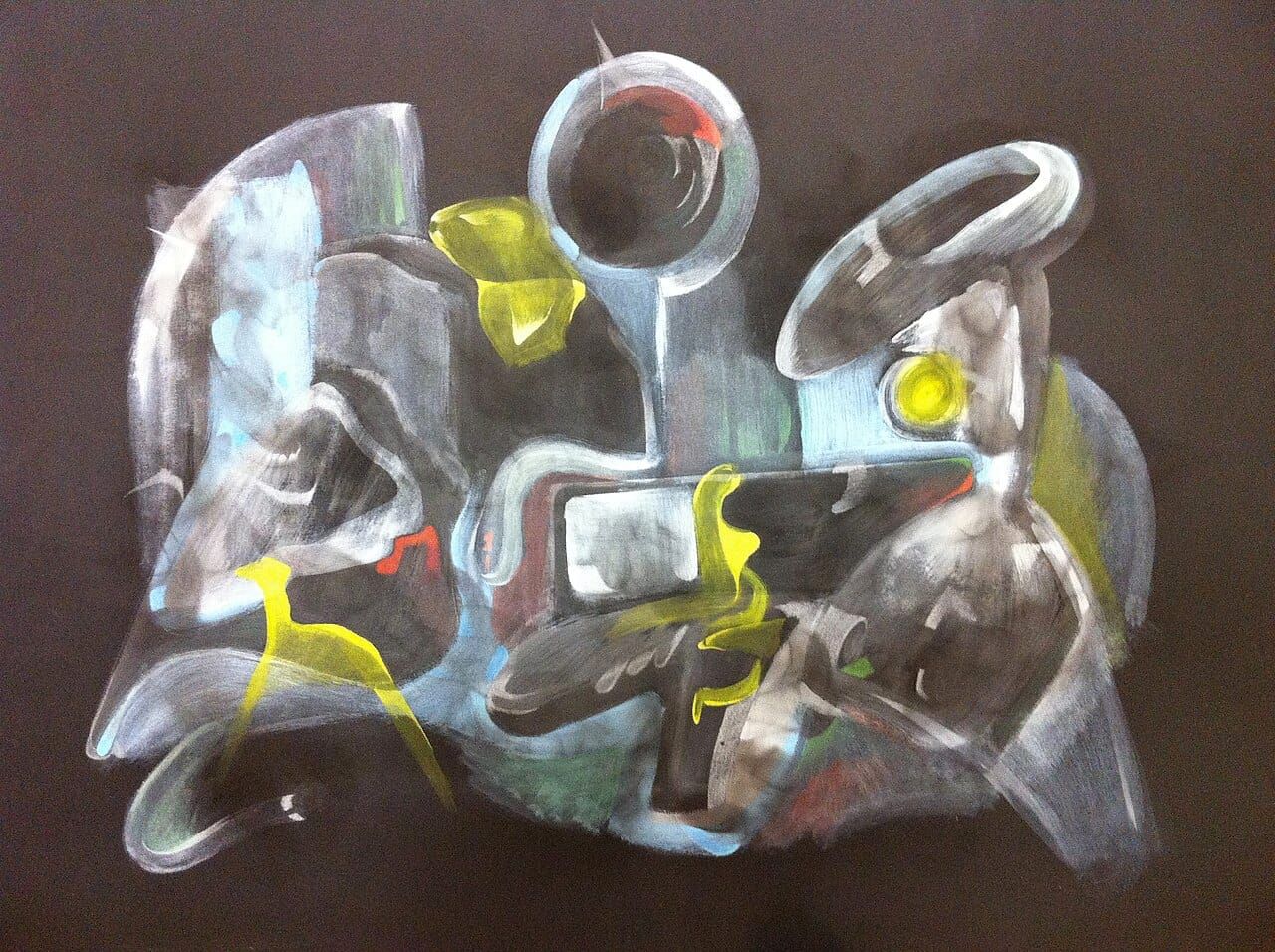
I felt particularly drawn to a select group of these artists, who interpreted the surrealist movement that originated in post-World War I France and dominated American aesthetic circles during the 1930s and 1940s. By dipping into the creative force of their subconscious, they produced images that went beyond the bounds of logic to offer a glimpse of nature beyond what we can see with the naked eye.
Once the curators completed their walkthrough, we were allowed to explore these works at our own pace. Upon closer examination of each work, I could see how each unique brushstroke, click of the camera, or molding of a piece of clay, metal, or stone seemed to sing its own tune.
After viewing each work of art in a given room, I would step back and soak in all the art that was placed together within the same area of focus. I could feel how each piece retained its uniqueness while connecting with the surrounding art to create a singular sound. This visual symphony both celebrated and critiqued the impact of urbanization and industrialization on the untamed beauty that defines the Pacific Northwest. Not surprisingly, the visual music reached a crescendo toward the end of the century—warning us of what this region might become if we continue to desecrate this land that was once pristine but bears signs of becoming polluted and putrid.
Will we need humans to create art?
I exited Beyond Mysticism filled with a sense of both childlike wonder and existential dread. Here I am in Seattle, a major IT hub for tech giants like Microsoft, Google, and Amazon. They continue to push their vision of an AI utopia where Bill Gates opined, "We won't need humans for most things."
As I noted in an earlier article for OnlySky, I can envision a future where AI can be utilized as a potential guide to connect us, not to isolate us in our own bubbles. In a similar capacity, AI can help perform routine administrative tasks like spell checking, transcribing, and organizing.
But can AI create art in the way a human would understand it—as the expression of a genuine creative impulse, and not just a mashup or imitation of what others have done?
So far, AI can only replicate those artistic works that have already been created by an actual human. For example, one can ask AI to execute a command like, "Create a painting in the style of Salvador Dali that captures Mount Rainer." The ensuing result might look captivating to the eye. But upon further inspection, AI-generated prints lack any unique identifiers that ascribe an artwork to a given artist. Think about watching a reality TV show versus actually living in reality. These ventures into AI art might be entertaining, but they're clearly not educational or enlightened. Furthermore, the energy required to produce such artificial representations appears to have a catastrophic impact on the environment.
Yet, the Pacific Northwest also possesses a Celtic-like spirituality that seeks to connect this world to the next, coupled with a pioneering sensibility grounded in the earth with a quest for products made using organic and sustainable means. Along those lines, I'm seeing a push for authenticity as a small but growing number of Seattleites who are getting off their screens and seeking out genuine in-person connections.
Fast forward to 2126. Assuming we still have a viable planet, will the Seattle Art Museum's focus be on authentic works of art—or on displaying AI-generated depictions of reality?
