
#/media/File:(20260111)_Berlin_Vigil_in_Memory_of_Ren%C3%A9e_Nicole_Good_03.jpg)
American autocracy
The U.S. government is at war with its own people. Other countries' experience gives us a guide for what to do.

Those of us who voted for Kamala Harris can only say, "We told you so."
We're a year into Donald Trump's second term, and it's as horrendous as progressives knew it would be. He's wrecking democratic norms, weaponizing the federal government and flouting the law at every turn, acting like a mad child-king or a petty dictator bent on settling scores.
He's pardoning his criminal allies and bringing sham prosecutions against rivals. He's bombing and invading other countries without even a pretense of congressional approval. He's deposed the leadership of Venezuela, not to bring democracy, but to run the nation as a colonized fiefdom. He's threatening our (former?) allies around the world with invasion and annexation. He's unilaterally imposing ruinous tariffs and trying to cut off federal funding to force states, cities, universities, law firms and the media to bend to his whims.
Last but certainly not least, he's waging war in the streets against the American people. He's unleashed masked ICE thugs to terrorize and brutalize immigrants and citizens alike, Gestapo-style. This violent paramilitary force is beating and tear-gassing protesters, kidnapping people off the streets, dragging them out of their cars, disappearing and arbitrarily detaining them with no regard for due process.
The twin cities of Minneapolis and St. Paul have been at the epicenter of this reign of terror. Immigrants are hiding in their homes like Anne Frank for fear of ICE. Public schools have gone virtual in response to ICE agents snatching students and parents as they go to and from school.
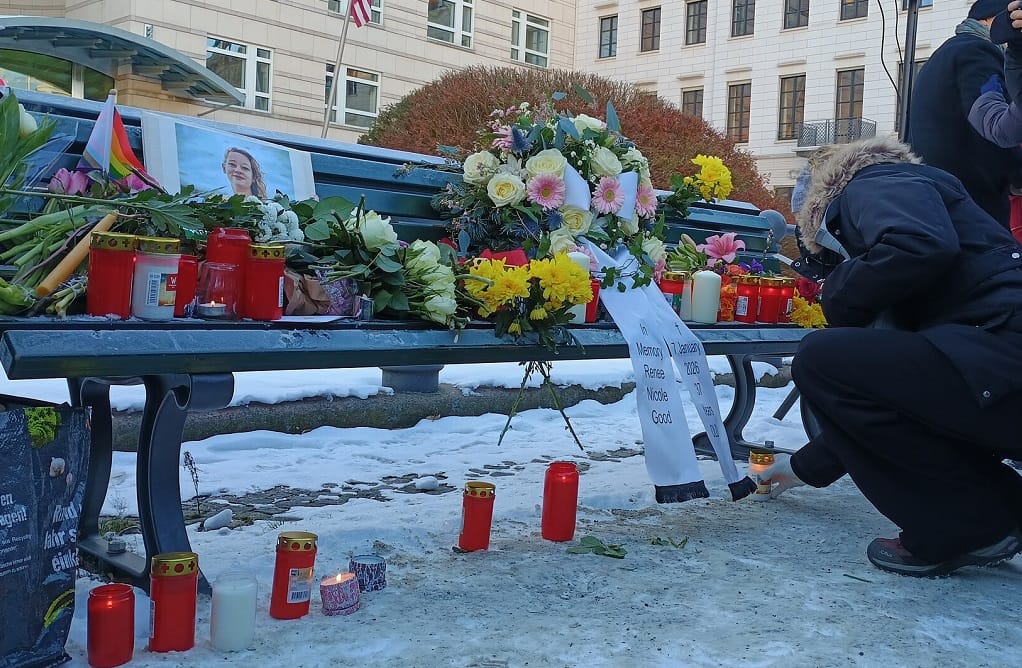
Most infamously, Renée Nicole Good, a U.S. citizen, was shot and killed by ICE agent Jonathan Ross. She's the most well-known, but by no means the only, person who's died at the hands of ICE—either in street shootings or under murky circumstances in concentration camps.
Can there be any coming back from this? Is there hope for the restoration of democracy and a better future? Or should we write America off as a failed experiment?
How did we get here?
It's important to know that Trumpism didn't come out of nowhere. Although a few conservative politicians have offered feeble protests, for the most part, Trump's rise to power and subsequent abuse and subversion of democracy has happened with the full consent and approval of the Republican party.
There's a reason for this, as Professor Steven Levitsky says. Republicans willingly acquiesced to authoritarian rule because they were facing what, for them, was an existential threat: a future where rich white Christian men no longer wield sole power.
White Christian hegemony has been a fact of life in America since its founding. However, over the decades, America has become increasingly tolerant, multiracial, and secular. Step by painful step, we've made progress toward true democracy. Women, people of color, and nonbelievers have gained in numbers, cultural acceptance and political power.
Conservatives were terrified by this. They saw it not as the realization of a long-deferred promise, but as a zero-sum game they were losing. They tried to stop it by any means necessary.
They engaged in systematic gerrymandering, drawing jigsaw-puzzle-like congressional districts to thwart the will of the voters. In Congress, they abused the filibuster to stymie progressive legislation that had majority support. A conservative Supreme Court has repeatedly issued decisions that weakened unions, struck down civil rights-era voter protections, and removed restrictions on corporate funding of elections. Red-state legislatures have tried to ban books, outlaw DEI programs, and put a stop to anything else that promotes equality or diverse viewpoints.
But all their efforts weren't enough, as Levitsky says:
In 1980, Ronald Reagan won 55 percent of the White vote and translated that into a landslide 44 state victory. In 2012, Mitt Romney won 59 percent of the White vote but still lost the election. When Republican leaders realized they were winning the white vote but losing the American vote, they started to panic.
When all their other power-grabs failed, Republican voters and politicians proved willing to junk democracy and install an autocrat rather than share power. This was always coming; if it hadn't been Trump, it would have been someone like him.
What do we do now?
As Levitsky says, America isn't ruined beyond all hope of reconstruction. The U.S. isn't Russia or North Korea, where the ruler's will reigns supreme and all opposition has been crushed. We still have a long history of constitutional law, checks and balances, and peaceful transitions of power.
We have a thriving civil society, funded by rich donors who aren't beholden to the government, and arguably the strongest protections in the world for free speech, protest, and freedom of the press.
The Democratic party, for all its faults (and it has many), has the institutional muscle to contest races all around the country. It's a viable alternative for voters to rally around.
Most of all, we have an angry, energized public that's standing up against autocratic incursion. That may prove to be the most vital part.
Many authoritarian leaders past and present were popular, at least initially. Hugo Chavez in Venezuela, Vladimir Putin in Russia, Nayib Bukele in El Salvador, and others enjoyed sky-high approval at various points in their tenure. That's something Donald Trump has never been able to say.
Although he won election because of low turnout, there have been protests and resistance to his lawless overreach at every step. He and his lackeys have repeatedly made terrible decisions that provoked widespread outrage and hampered their own agenda, whereas a more competent autocrat might have been able to accomplish the same goals with less outcry.
It may feel pointless to call your representatives, write letters, attend protests, or join resistance groups, since none of those things directly prevent the federal government from abusing and killing people. However, the most important thing that an ordinary citizen can do in the face of authoritarianism is to signal noncompliance.
As Canadian prime minister Mark Carney said, citing Václav Havel:
Every morning, this shopkeeper places a sign in his window: "Workers of the world, unite!" He does not believe it. No one believes it. But he places the sign anyway — to avoid trouble, to signal compliance, to get along. And because every shopkeeper on every street does the same, the system persists.
...Havel called this "living within a lie." The system's power comes not from its truth but from everyone's willingness to perform as if it were true.
The power of autocratic regimes rests in the acquiescence of ordinary people. No authoritarian state, however efficient or ruthless, can repress an entire population at once. They need the consent, either active or tacit, of the majority.
That's why authoritarian rulers depend on most people making the calculation that it's easier, less costly, or less risky to keep their heads down. They thrive on apathy, on disengagement, and on establishment figures—in politics and the media—who are willing to normalize their behavior, downplay it, or excuse it.
The more of us who refuse to play along, who refuse to comply, who stand with the oppressed, the shakier their grasp on power becomes. Every protest, every show of resistance, signals to those on the sidelines that the regime's grasp on power isn't absolute. And when resistance becomes so widespread that it reaches the point of critical mass, it can topple any regime.
Recovering from autocracy
Autocracy isn't inevitable or inescapable. Other nations that have gone through periods of authoritarian rule have thrown off the yoke and become democratic again. That experience gives the population a collective memory of how to resist effectively, which can be put into practice the next time someone tries.
South Korea was a military dictatorship as recently as 1987, but a massive democratic uprising forced the government to allow constitutional reform and free elections. South Koreans learned from that history, and when President Yoon Suk Yeol tried to declare martial law in 2024, he was swiftly defeated, removed from power, and sentenced.
Brazil, too, endured twenty years of dictatorship established by a U.S.-backed coup, ending in redemocratization in the 1980s. That experience is why President Jair Bolsonaro's failed coup in 2022 ended in prison terms for him and his supporters, unlike in the U.S.
America should learn and take heart from these and other examples of successful resistance to autocracy. The path ahead is dark, and there will be more suffering and tragedy, but all hope isn't lost. Democracy is worth defending. We've thrown off self-proclaimed absolute rulers before, and if need be, we can do it again.
