

Say it again: Abortion bans don't stop abortion
They only cause women and infants to die.

Three years ago, Roe v. Wade was overturned by an ultraconservative Supreme Court. Enough time has passed that we can judge the impact of this ruling. How has it played out in the lives of American women and other people with uteruses, and what prospects are there for the restoration of reproductive rights?
Abortion in the post-Roe America
It was always obvious that abortion bans wouldn't affect wealthy women. They'll always have the option to travel to places where abortion rights are protected.
However, that privileged class is the minority. You might guess that abortion rates would have fallen among poor and working-class women—people who don't have the resources to travel, who can't afford to pay for the procedure or take the time off work.
But that guess would be wrong.
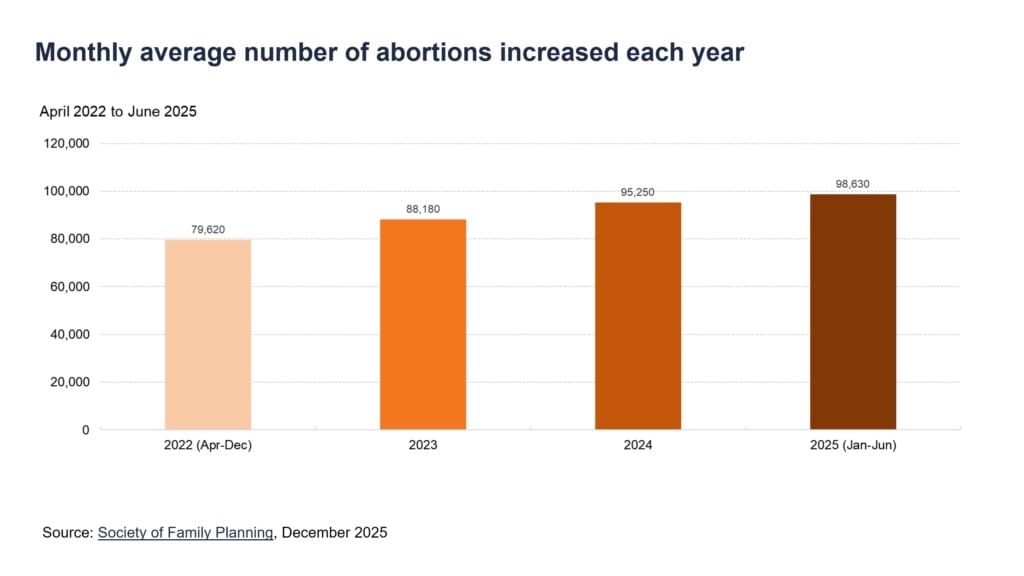
The Society of Family Planning, a reproductive-rights nonprofit, compiles a report called #WeCount that tracks the number of abortions in the United States. The report goes back to 2022, and the most recent data covers the first half of 2025.
Its data shows that the abortion rate hasn't gone down at all since the end of Roe. It's gone up.
Early in 2022, the U.S. abortion rate fluctuated around 80,000 per month. After state-level bans went into effect, it started to rise, and it's been rising ever since:
The monthly average number of abortions climbed from 79,600 in 2022, to 88,200 in 2023, to 95,300 in 2024, to 98,800 in 2025.
Also, this figure is bound to be an undercount, for the obvious reason that #WeCount can only track abortions that take place under the supervision of the medical system: through clinics, hospitals, and other licensed providers. It can't count women who end their pregnancies outside the system, such as by buying pills on the black market.
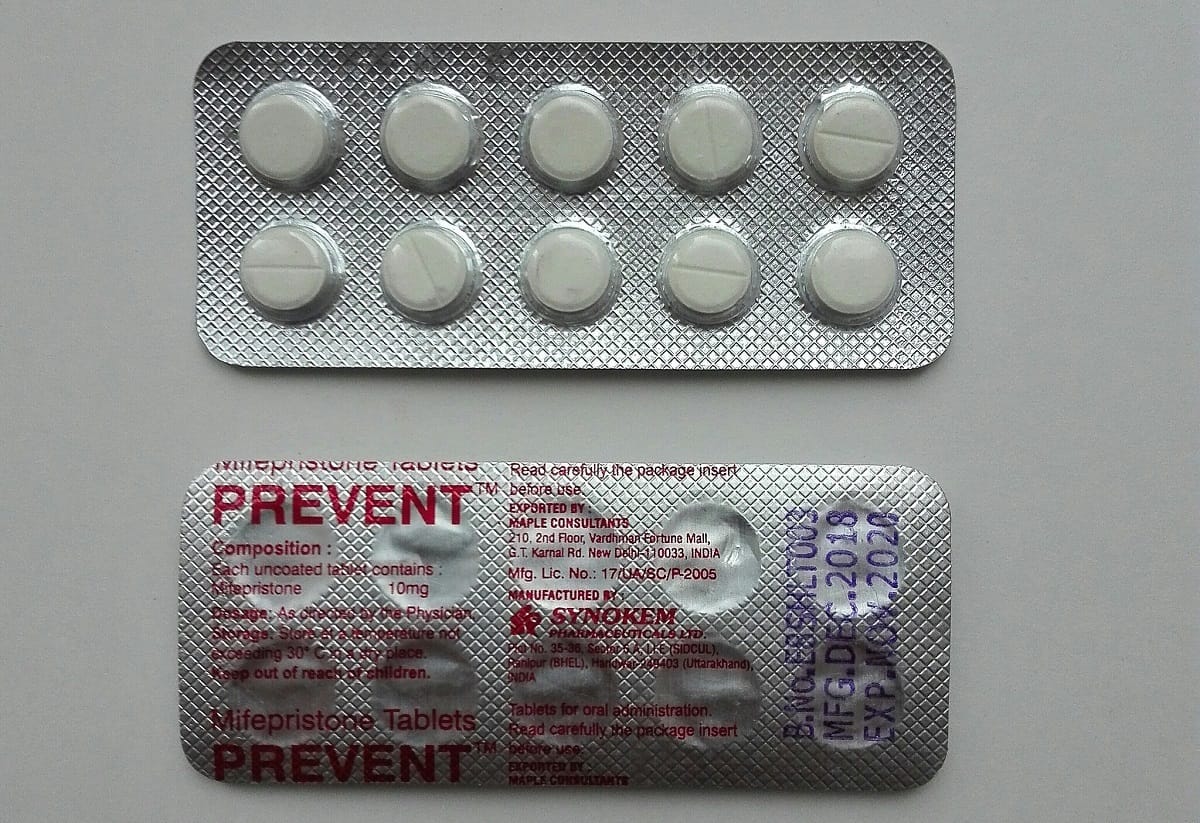
While the number of abortions hasn't decreased, what has changed is the nature of the procedures. While Roe was in effect, most abortions were in-person. Since then, a larger share of procedures are through telehealth, where women have a virtual consultation with a provider and get abortion-inducing medication sent through the mail for them to take at home.
Groups like Aid Access facilitate these telehealth procedures, which are a major means for women living in ban states to control their reproductive destiny. Abortion-ban states have raged and fumed about this, but so far, blue state shield laws have prevented them from doing anything about it.
Some nominally pro-choice people will be cautious about how they report this. They'll fall back on careful, hedged language about how we shouldn't celebrate abortion, at best it's a sad necessity, and so on.
Let's blow away this smog of cowardice. This number is worthy of celebration.
Why to celebrate abortion
What this shows is that the religious right has tried their utmost to deprive women of autonomy—and they've failed.
Let's not forget, they've spent a staggering amount of time and energy getting to this point. After their leadership made a political decision that fighting desegregation was a lost cause, the religious right reorganized around banning abortion. That's been their all-consuming obsession for decades.
They've lobbied, marched and picketed. They've preached countless anti-choice sermons calling down hellfire on America. They've poured billions of dollars into getting anti-choice politicians elected. They've tried to frighten and shame women, squeeze clinics out of business with onerous regulations, and chase doctors out of practice through harassment, intimidation and outright violence.
This was supposed to be the moment of their triumph. The overturning of Roe was the culmination of their dreams. They thought it would be the start of a new era of glorious theocracy, where their particular version of religious dogma would reign over the land.
But that hasn't happened. If the goal was to stop abortion and bring women's bodies under the control of the state, they've completely failed. Even with a captive Supreme Court, a heavily gerrymandered Congress, and a wildly misogynist president on their side, they haven't decreased abortion rates at all. Instead, they've actually increased.
This shouldn't come as a surprise. Abortion bans incentivize abortion.
When women are confident that they can get the care they need in an emergency, they might be willing to take on more risk for the sake of starting a family. But in a post-Roe America, if a woman has any doubts about her own health or the viability of her pregnancy, it's better to end it early, safely. If she lets the pregnancy progress and there's a crisis, she might die because because doctors' hands are tied by cruel laws. There are thousands of women making that rational calculation.
If there's anything to mourn about this number, it's that some people who'd otherwise want to start a family now find it too risky. However, you have to compare that to the alternative: a world where women are robbed of autonomy over their own bodies, forced to have children whether they want to or not, and barred from lifesaving medical care in the name of God's will. The religious right has failed to achieve that Gilead fantasy despite all their effort, and that's something to celebrate.
Abortion bans are women's healthcare bans
Now here's the bad news. It's true that the abortion rate hasn't decreased. What has changed is maternal mortality: it's gone up.
The U.S. already had one of the highest rates of maternal mortality among developed countries. Within the country, red states had higher death rates than blue states. Abortion bans have exacerbated these disparities. They're causing women and infants to die:
Women who lived in states that ban abortion were significantly more likely to die during pregnancy, while giving birth, or soon after the birth of their child, compared to those who lived in states where abortion care was legal and accessible, our analysis shows. A mother's risk of dying was nearly twice as high in the banned states.
Texas, which has some of the country's harshest anti-abortion laws, has a disproportionate number of maternal deaths. The horrible, and completely preventable, death of Nevaeh Crain is an example of the havoc these laws have wrought.
In the throes of a miscarriage and dying from sepsis—bleeding, feverish, in agony—Crain, who was 18, went to the ER three times in a desperate search for help. But doctors were afraid to intervene until they could no longer detect a fetal heartbeat. By then, it was too late:
By then, more than two hours after her arrival, Crain's blood pressure had plummeted and a nurse had noted that her lips were "blue and dusky." Her organs began failing.
Hours later, she was dead.
As I've said before, abortion bans are more accurately described as women's healthcare bans. They frighten doctors away from helping suffering and dying women, because they can't be sure what they will or won't be prosecuted for. That's not an accident; it's by design. The lawmakers who draft these laws see these deaths as an acceptable price for imposing their patriarchal worldview.
Sadly, there's little prospect for repealing these laws in the near term. Unlike the death of Savita Halappanavar, which galvanized Ireland into scrapping its abortion ban, Americans seem to have a case of learned helplessness. Also, the legal structure that allows women in red states to seek help from blue states has acted as a pressure-release valve.
However, the long-term consequences of these bans are only going to accumulate. As insurance costs skyrocket and doctors flee red states, routine care is going to be harder and harder to obtain. Younger generations are less religious and more pro-choice, and they haven't learned to meekly accept their own oppression and death. Eventually, there may come a point where even apathetic Americans rise up to demand their rights. The only question is how many human beings will die unnecessarily before that day arrives.
